

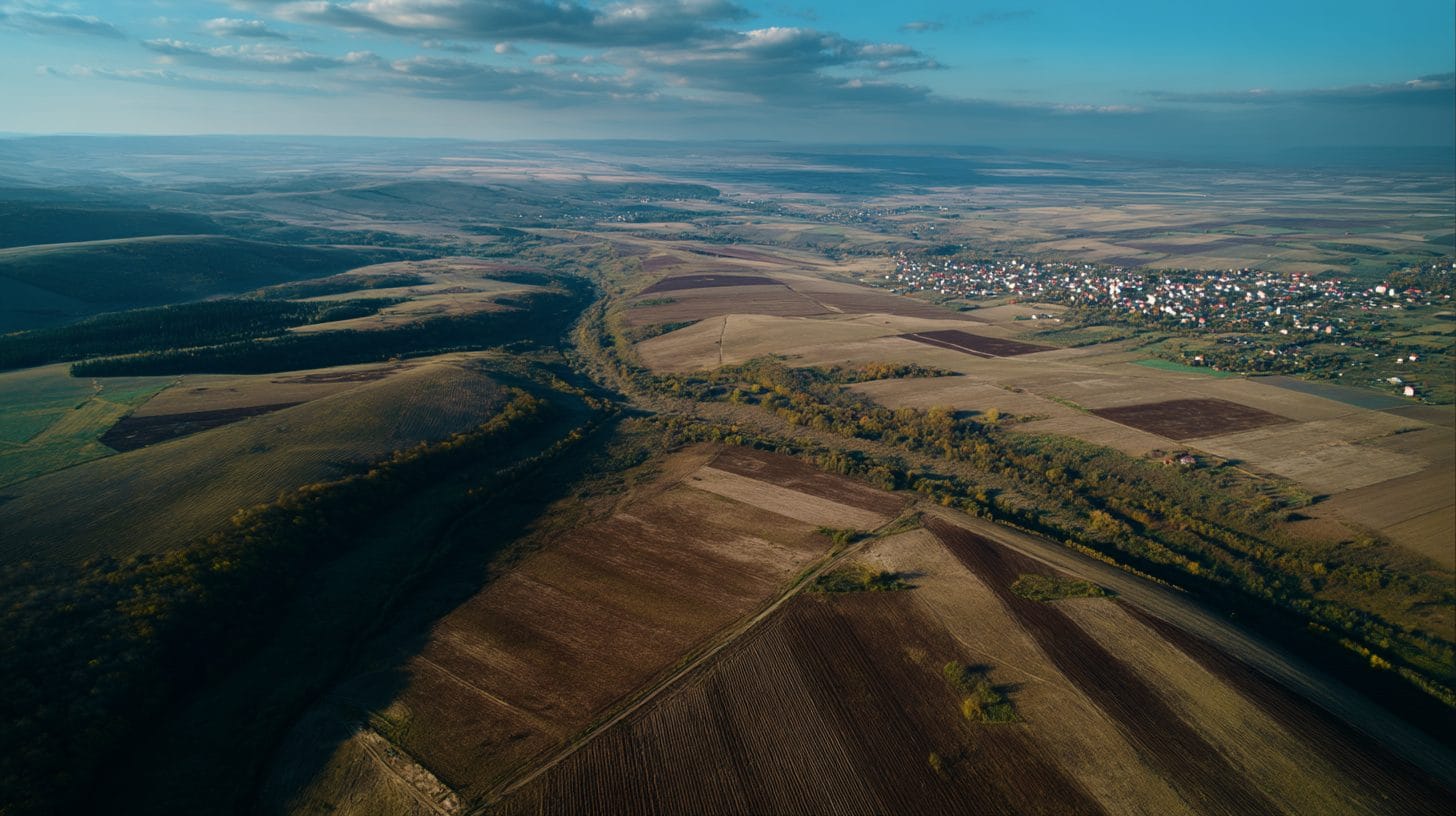
Galati, a city uniquely positioned along the Danube River and near Romania’s eastern border, is fast becoming a hub for strategic real estate investments. Among the most desirable opportunities in 2025 is commercial land for investors in Galati, owing to a confluence of economic, infrastructural, and geopolitical factors. Forward-thinking investors are increasingly drawn to Galati’s evolving real estate dynamics as Romania asserts its role as a key player within the EU’s eastern corridor and maritime logistics networks.
One of the primary drivers behind the rising interest in Galati’s commercial real estate is its strategic location. Situated close to both the Black Sea and the borders of Moldova and Ukraine, Galati is a vital transport and logistics node linking Western Europe with Eastern trade routes. This has positioned the city as a favorable destination for warehousing, distribution centers, and cross-border commerce. The 2025 outlook for infrastructure development further amplifies this appeal, with both public and private sectors investing in highways, rail connections, and port modernization projects that enhance the region’s commercial compatibility.
Romania’s Economic Growth and EU Integration
Romania has demonstrated stable economic progress and increasing integration with EU standards, which has had a positive spillover effect on the regional property markets. With a forecasted GDP growth of over 3% for 2025 and steady foreign direct investment inflows, the macroeconomic environment remains favorable for land acquisitions. Galati, in particular, is benefiting from both the NextGenerationEU funding allocated to development projects and Romania’s focus on strengthening its eastern trade gates.
The Romanian government’s supportive stance toward foreign investment, coupled with predictable legal frameworks and property ownership rights for non-citizens, enhances investor confidence. This regulatory clarity translates into more efficient transactions and reduced risk on commercial land deals, especially in second-tier cities like Galati where acquisition costs are still relatively low compared to Bucharest or Constanta.
High Demand for Logistics and Industrial Development
Demand for logistic hubs and industrial parks in Galati has surged over the past few years, and projections indicate this trend will continue in 2025. A key factor fueling this demand is shifts in European supply chains, as companies seek to diversify their distribution points and reduce dependency on singular supply streams. Galati’s location allows efficient multi-modal transport with access to river, road, rail, and sea, making it an ideal site for fulfillment centers and value-added industrial developments.
Moreover, the ongoing conflict in Ukraine and the increased emphasis on EU security and supply chain resilience have led to a reconfiguration of logistics routes in Eastern Europe. Investors in commercial land in Galati are positioned to benefit from this reconfiguration, as the city serves as a buffer and a bridge in the evolving trade landscape.
Business Incentives and Operational Advantages
Local authorities have made concerted efforts to attract foreign investors by introducing tax incentives for businesses that bring value to the Galati region. Investors who develop commercial land for warehouses, factories, or business parks can benefit from reduced local taxes, subsidies for employment generation, and fast-track permitting processes. Additionally, the city’s existing industrial base and engineering talent from the local university support labor availability at competitive costs.
Operationally, Romania offers one of the lowest corporate tax rates in the EU at 16%, with additional benefits for reinvested profits. For commercial real estate investors focused on long-term leasing models, these tax conditions contribute to strong net yields and improved cash flow resilience.
Versatility of Commercial Land Opportunities
The diversity of available plots of commercial land for investors in Galati allows for flexible strategies. Plots near the port cater well to maritime and logistics enterprises, whereas land near transit points or within industrial zones is suitable for manufacturing facilities. The city also offers brownfield opportunities—former industrial sites ready for redevelopment—which brings down initial acquisition costs and opens the door for value-adding through land rezoning or infrastructure improvements.
Furthermore, as Galati modernizes, underserved commercial sectors such as retail warehousing, office complexes, and multi-use developments are emerging as underexploited segments with rising consumer and business demand. Investors capitalizing on early entry into these growing submarkets may benefit from both capital appreciation and favorable lease terms in the medium to long term.
Sustainability and ESG Trends
Investors in 2025 are increasingly influenced by Environmental, Social, and Governance (ESG) criteria. Romania’s national sustainability initiatives and EU-aligned policies support the development of energy-efficient commercial projects. Galati’s potential for green logistics centers—especially near the port or in newly designated industrial parks—is of particular interest to institutional investors seeking sustainable assets in emerging European markets.
Furthermore, the availability of commercial lands in proximity to renewable energy infrastructure, including future solar and wind installations, enhances their appeal to environmentally conscious investors and tenants. Integrating ESG considerations early in the land development phase can lead to better long-term positioning and alignment with global investment standards.
Capital Appreciation and Exit Strategies
Commercial land in Galati offers investors the dual benefits of operational returns and long-term capital gains. Land prices remain competitive, but values are steadily increasing, driven by infrastructure upgrades and increased demand from both national and international companies establishing regional bases. Early-stage investments made in 2025 are likely to witness attractive capital growth over the coming years, particularly if tied to logistics or industrial developments.
Exit strategies are equally compelling, especially for partners operating under build-to-lease or build-to-sell models. Minimal competition in some property sub-sectors allows investors to set benchmark valuations for future transactions. Rialto exits, REIT integrations, or corporate acquisitions are all feasible routes within a 5–7 year investment horizon, depending on asset development and regional economic trends.
Conclusion
Commercial land for investors in Galati is emerging as one of the most promising asset classes in Romania’s evolving real estate market. With a strategic location, a strengthening infrastructure network, and policy-backed investor support, Galati combines strong fundamentals with future-oriented potential. Investors with a forward-looking perspective, seeking entry into fast-developing logistical and industrial corridors of Eastern Europe, will find Galati not just viable, but highly strategic in 2025 and beyond.
Interested in Land Investment in Romania?
We specialize in high-yield land and property opportunities for serious investors.
VIEW OUR CURRENT PORTFOLIOSecure your investment with Land For Investors.

Published: January 20, 2026