

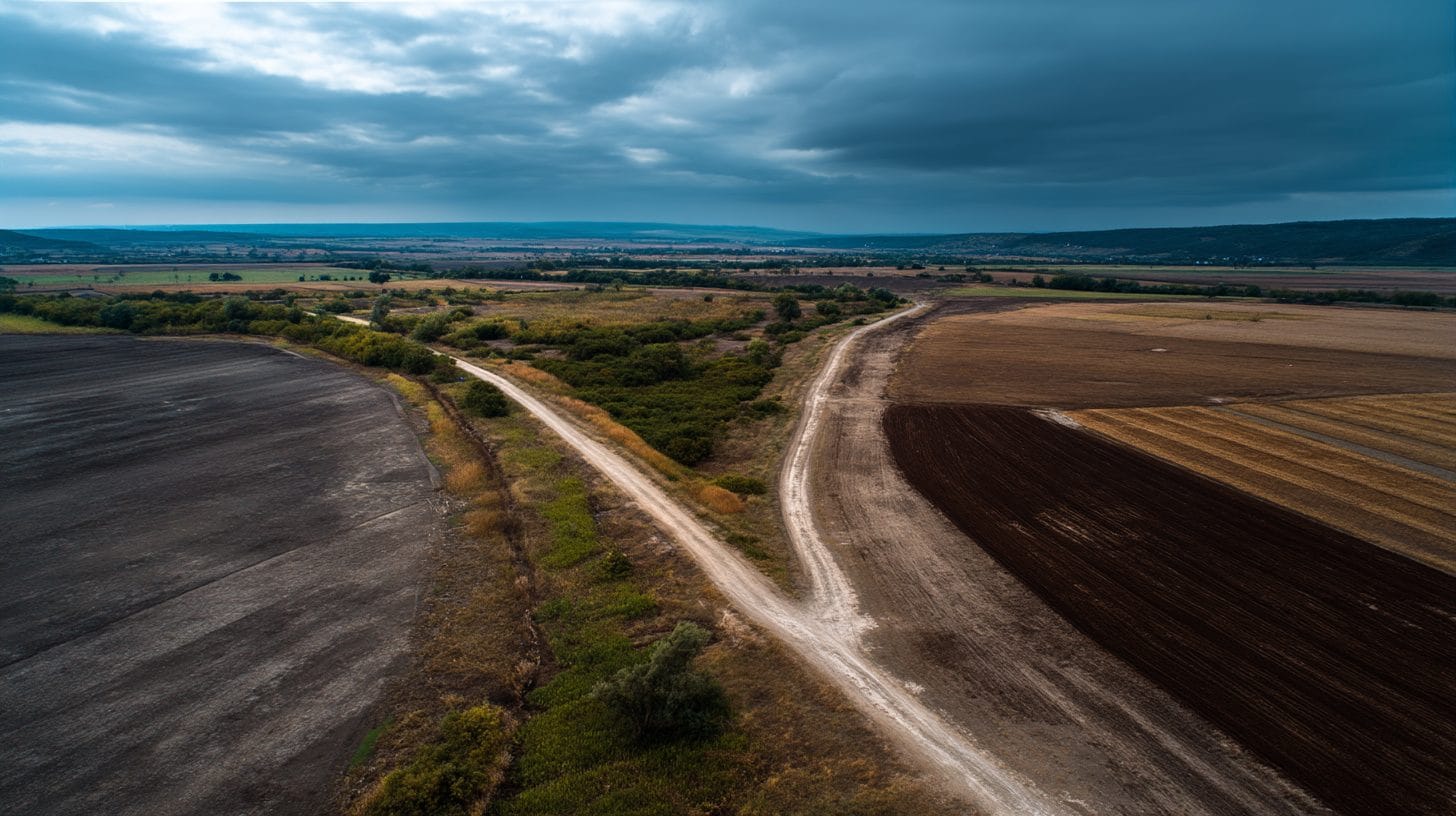
As Romania continues its steady economic growth and regional digital transformation, land designated for infrastructure development is gaining interest from strategic investors. One of the most promising segments is data center development, specifically in the emerging tech corridors of the country. Among these, the availability of data center land in the metropolitan area of Moldova—particularly around cities like Iași, Bacău, Galați, and Suceava—presents a strong investment opportunity. For those seeking data center land metropolitan area Moldova for sale, understanding pricing trends, current demand, and long-term forecasts is essential for making an informed acquisition.
Romania’s Eastern Tech Hub: Why Moldova?
Moldova, the northeastern region of Romania, has seen a noticeable pivot towards digitization, supported by EU structural funds, government initiatives, and increased foreign technology investment. Known primarily as an academic and industrial region, cities like Iași are evolving into hubs for IT services, cloud solutions, and digital outsourcing. This transformation has created a subsequent need for data infrastructure, making developable land in these urban peripheries highly appealing.
Investors looking for data center land for sale in Moldova’s metropolitan areas are seeing above-average growth patterns due to competitive land prices, access to skilled labor, low seismic risk, and adequate support from local authorities. These factors combine to make the region an attractive alternative to saturated and expensive markets like Bucharest or Cluj-Napoca.
Current Market Dynamics and Pricing Trends
The price of data center land in the metropolitan area of Moldova varies significantly depending on proximity to city infrastructure, access to fiber optic networks, and electricity grid capability. In areas immediately adjacent to Iași or Bacău, parcels with existing utility connections and urban zoning permissions are priced between €20 and €60 per square meter. More remote but still viable plots—requiring basic infrastructure investments—can range from €10 to €30 per square meter.
Land parcel size also plays a role. Demand skews toward lots larger than 5,000 square meters, allowing scalability for hyperscale, colocation, or enterprise data centers. There’s also a budding market in acquiring smaller adjacent parcels with future plans for land consolidation, particularly in zones forecasted for municipal development.
Electricity availability and power redundancy are critical factors in shaping pricing. Grid-connected sites near transformation stations or with substations within a 2–3 km radius command a premium. Properties offering dual redundancy or proximity to renewable energy sources (e.g., hydroelectric or wind facilities in Suceava County) have also started to see increased competitive bidding.
Who Is Driving Demand?
The demand for data center land in the Moldova region is fueled by a mix of domestic cloud services firms, regional telecommunications groups, and international data infrastructure funds targeting underserved Eastern European markets. As Romania sits at the crossroads of EU and Eastern European internet traffic, the geographical importance of this region for latency-sensitive operations is drawing greater international attention.
Notably, edge computing deployments are accelerating here. Companies are establishing smaller data centers nearer to users in Iași, Galați, and Piatra Neamț to cater to real-time services such as content streaming, smart city logistics, and IoT ecosystems. These edge nodes are increasing demand for mid-sized, upgradeable land parcels with scalable zoning status and favorable grid access.
Moreover, Romania’s favorable corporate tax regime, combined with competitive energy pricing relative to Western Europe, is reinforcing the country’s position as an operational base for high-compute infrastructures. Additional encouragement comes from government-level talks about earmarking the Moldova region as a special technology investment zone, which could include incentives for technology and data infrastructure projects.
Infrastructure and Connectivity Considerations
A defining feature enhancing Moldova’s potential as a data center base is its improving logistics and infrastructure network. Major upgrades to the A7 and A8 motorways, connecting the region more efficiently to major corridors, will ease equipment transport and operational logistics for data center operators.
Fiber optic backbones are steadily expanding, funded in part by EU digital cohesion initiatives and private telecommunications ventures. Iași and Bacău now serve as data transit points connecting Ukraine, Moldova (the country), and the rest of the EU—creating a strategic nexus for cross-border data storage and management. Investors in industrial or technological land on these transit lines are positioning themselves favorably for future leasing or development deals with telecom and cloud operators.
Energy security is another pillar of site selection. The Moldova region’s regional grid authority has reported ongoing improvements in redundancy systems and peak load capabilities. Additionally, interest is growing in integrating renewable energy installations adjacent to or within data center campuses—both for sustainability and long-term operational cost benefits.
Long-Term Growth Forecast and Exit Potential
Forecasts suggest that Romania will see steady growth in total data center capacity over the next decade, with the Moldova region possibly doubling its current digital processing footprint by 2030. This forecast is supported by long-term commitments to digitization in public administration, Smart City pilot programs, and new EU funding cycles focused on high-performance computing and cloud accessibility.
The land appreciation potential is also strong. Recent transactions in the outskirts of Iași and Galați suggest annualized land value growth rates of 6–9% over the past five years, with certain high-spec plots achieving double-digit increases when aligned with utility upgrades or zoning changes.
Exit strategies for early land investors appear promising: strategic acquisitions by global data providers, public infrastructure leases, or long-term revenue through land leasing models. Moreover, developers are expressing interest in co-location campuses and hybrid server farms in medium-sized cities where land is still competitively priced but logistically sound.
A Strategic Play for Forward-Looking Investors
For investors seeking to future-proof their portfolios in Romania, acquiring data center land in the metropolitan area of Moldova presents a balanced profile of risk and reward. Competitive land prices, a developing digital economy, improved regional infrastructure, and high demand for low-latency data services are reshaping the land product into a premium real asset class.
While careful due diligence on zoning, grid access, and regional planning policies remains crucial, early movers who secure strategically located plots today may stand to benefit from surging demand over the coming decade. Moldova’s rising digital footprint, EU-supported infrastructure, and proximity to key Eastern European markets create compelling positioning for data center development and investment diversification into Romanian real estate.
Interested in Land Investment in Romania?
We specialize in high-yield land and property opportunities for serious investors.
VIEW OUR CURRENT PORTFOLIOSecure your investment with Land For Investors.

Published: January 20, 2026