

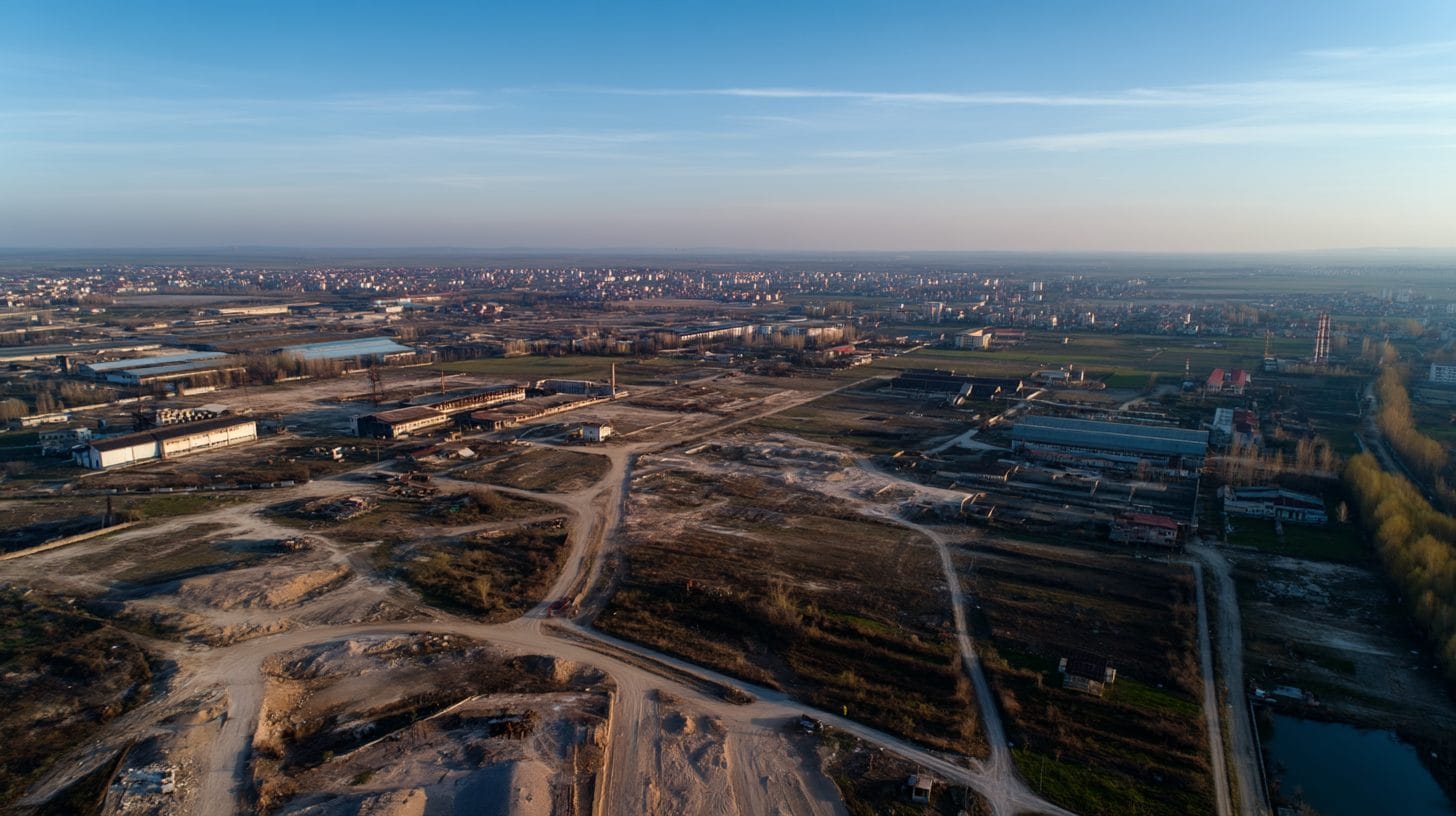
Sibiu, a key urban center in central Romania, is rapidly emerging as a prime destination for commercial property investment, particularly in the retail land sector. With increasing demand from both national and international retailers, retail land high ROI in Sibiu is no longer just a local trend—it is a growing reality backed by strong economic indicators, urban expansion, and strategic positioning. For investors seeking long-term gains in Eastern Europe, Sibiu offers a combination of affordability, consistent rental yields, and capital appreciation potential.
Understanding market prices for retail land in Sibiu
Sibiu’s retail land prices vary depending on location, access, and zoning. Generally, plots located along major arteries such as Șoseaua Alba Iulia or near Shopping City Sibiu command higher premiums, with prices ranging between €150 and €300 per square meter. In emerging commercial zones or secondary streets within the city’s southern or eastern perimeters, prices can dip below €100 per square meter, often offering more room for appreciation as urban sprawl intensifies.
Recent trends show that competition among retail brands entering secondary Romanian cities has led to increased demand for strategically positioned plots suitable for big-box stores, strip malls, and drive-through chains. Retail developers and REITs are actively scouting the Sibiu market for such opportunities, thereby driving up land values in traditionally underutilized zones. For example, areas such as Șelimbăr and Cristian, once rural outskirts, are now hosting retail developments as the city expands.
What drives the high ROI potential
Several key factors explain why retail land high ROI in Sibiu is garnering investor attention. Firstly, Sibiu has one of the highest GDP per capita rates outside Bucharest, supporting stronger local purchasing power. Secondly, the city hosts a large skilled workforce, thanks to both its industrial base and the presence of technical universities, creating a steady demand for consumer goods and services.
Tourism is another economic driver feeding the local retail economy. Sibiu’s historic center, recognized for its well-preserved medieval architecture, consistently attracts foreign tourists and Romanian domestic travelers throughout the year. This benefits high-traffic commercial areas, especially those on the edges of the old town, and increases the visibility and turnover potential of retail tenants.
From an infrastructure standpoint, Sibiu is strategically positioned between western Romania and major international trade arteries. Its well-connected road systems, including the nearby A1 motorway, facilitate commercial logistics, making it attractive to distribution-based retailers and logistics operators seeking land for both retail and hybrid uses.
Rental yields and income generation
Retail assets in Sibiu typically generate rental yields between 7% and 9%, with high-performing properties occasionally reaching double digits. Land that is developed into single-tenant retail units, like supermarkets or QSR (Quick Service Restaurant) formats, can be leased on long-term contracts to national brands eager to expand in high-traffic areas.
Moreover, land banking strategies—where investors acquire strategically located retail plots and hold them for medium-term appreciation—are growing in popularity. As zoning regulations evolve and future development corridors become clearer, previously undervalued land plots become prized investments, delivering ROI through both appreciation and eventual development.
A notable strategy adopted by local and international investors involves partnering with development firms to bring anchor tenants into newly planned retail zones. With major tenants in place, land value scales up, and exit options multiply—be that through resale to REITs or incorporation into larger portfolios.
Long-term outlook for retail land investment in Sibiu
The long-term fundamentals for Sibiu’s retail property market remain stable and optimistic. Romania, as an EU member state with a growing economy, continues to be a preferred destination for foreign capital. In Sibiu specifically, retail land investment aligns well with urban planning policies that support commercial densification near residential extensions.
Urban expansion policies from the Sibiu municipality indicate a focus on peripheral infrastructure developments, including road improvements, public transit extensions, and utility upgrades. These upgrades directly impact the value of adjacent or nearby land plots, especially when aligned with retail-led developments.
Furthermore, Sibiu International Airport is undergoing continuous upgrades to accommodate growing traffic. This adds another strategic layer for retail developers seeking to tap into traveler spending and logistics-oriented land use. Warehouses, last-mile delivery hubs, and showroom-retail hybrids are also becoming more common alongside traditional retail strategies, further diversifying ROI streams.
Risks and considerations for investors
While the retail land high ROI in Sibiu is attractive, investors must evaluate market-specific risks. One key variable is zoning compliance, which can vary from one district to another and may affect project timelines. Working with experienced local consultants or legal advisors is crucial during land acquisition to ensure the plot is fit for commercial development.
Additionally, despite Romania’s general investor-friendly environment, bureaucratic delays in obtaining construction permits or infrastructure authorizations can impact project delivery schedules. Maintaining realistic timelines and factoring in contingency margins in ROI calculations is essential.
Lastly, macroeconomic fluctuations such as inflation, interest rate shifts, or changes in consumer trends can impact both construction costs and retailer leasing demand. However, Sibiu’s diversified economy and strong demographic base provide a degree of insulation against broader regional fluctuations.
Land acquisition strategies that deliver consistent value
Savvy investors are increasingly adopting phased development models in Sibiu to hedge against upfront capital exposure. Acquiring larger tracts of retail-zoned land in 2,000–5,000 square meter lots and parceling them for customized developments has proven successful, particularly in the vicinity of retail anchors like Dedeman, Kaufland, or Lidl.
Another increasingly popular strategy involves collaboration with franchise operators seeking to enter Sibiu’s commercial market. By aligning with tenant operational plans early in the development process, investors can lock in pre-agreed leases with national brands, ensuring occupancy from day one and maximizing the ROI timeline.
Softened by Romania’s competitive land pricing as compared to Western Europe and bolstered by EU infrastructure funding, the entry cost for Sibiu-based retail land remains moderate. Measured against rental income, capital gains potential, and strategic development payoffs, the retail land high ROI in Sibiu becomes a clear value proposition for foreign investors.
Looking ahead
Sibiu continues to cement its status as one of Romania’s top provincial locations for retail land investment. With a balanced mix of urban growth, consumer demand, and commercial infrastructure, the city offers a compelling argument for investors looking to diversify their portfolios with high-yield, risk-moderate assets. Whether through development, leasing, or long-hold strategies, the retail property segment in Sibiu is positioned for continued positive performance—making now an opportune moment for discerning investors to assess and act.
Interested in Land Investment in Romania?
We specialize in high-yield land and property opportunities for serious investors.
VIEW OUR CURRENT PORTFOLIOSecure your investment with Land For Investors.

Published: January 20, 2026