

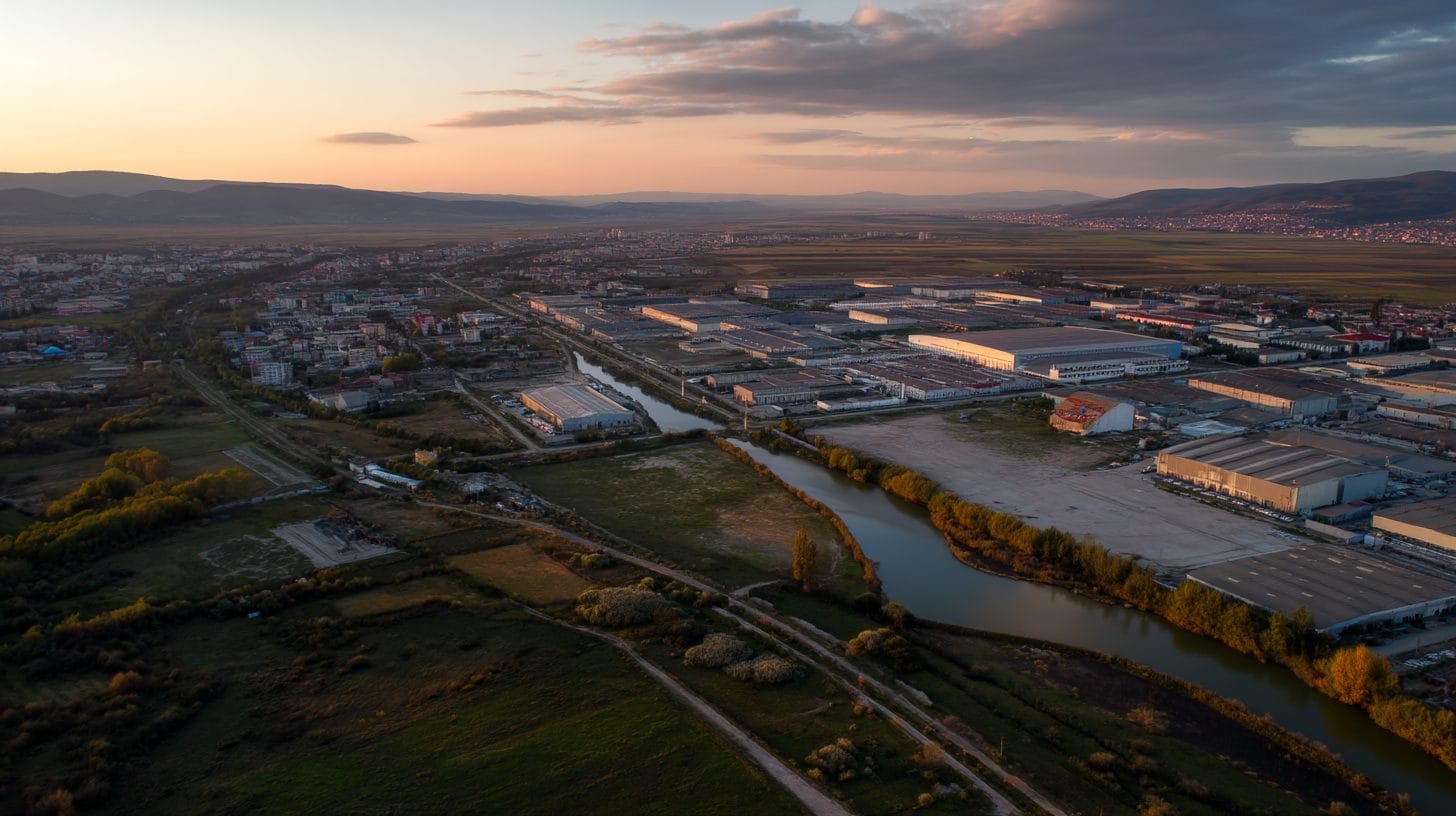
Located in southern Romania and bordering Bulgaria, property within Giurgiu has quietly emerged as a strategic choice for long-term real estate investment. For foreign investors looking to diversify portfolios and tap into Central Europe’s increasingly dynamic property market, Giurgiu County presents compelling opportunities driven by geography, infrastructure expansion, and policy shifts favoring land ownership.
While much of the investor spotlight in Romania has traditionally focused on Bucharest, Cluj-Napoca, or the Black Sea coastline, Giurgiu represents a unique corridor of growth less burdened by competition and inflated prices. Its proximity to Romania’s capital, positioning along the Danube River, and integration into pan-European transport networks all contribute to its appeal as an emerging investment frontier.
Strategic geographic positioning and infrastructure development
Giurgiu’s location is essential to understanding its investment case. Situated just 60 kilometers south of Bucharest, the county acts as a logistical and commercial link between Romania and the Balkans, particularly Bulgaria via the Giurgiu-Ruse Friendship Bridge. This strategic border access has long supported cross-border trade and transportation, and with ongoing infrastructure upgrades under EU-backed projects, the region is poised for accelerated economic integration.
The recent allocation of EU funding to upgrade regional roadways, improve river port facilities, and support cross-border industrial zones directly boosts the value proposition of property within Giurgiu. These initiatives not only enhance mobility but also signal the Romanian government’s long-term commitment to the area’s economic development. Road and rail modernization projects between Bucharest, Giurgiu, and further into Bulgaria make the county increasingly attractive for warehousing, logistics, and light manufacturing—driving demand for both land and commercial real estate.
Growth in industrial zones and cross-border commerce
Giurgiu is home to the Free Trade Zone of Giurgiu (Zona Liberă Giurgiu), a highly attractive prospect for foreign investors seeking to capitalize on duty exemptions, VAT advantages, and streamlined customs procedures. This zone has expanded rapidly over the past decade, drawing in logistics firms, transport operators, and manufacturers alike.
With the European Union supporting greater Balkan integration—a move that will only intensify post-Schengen expansion for Romania—the cross-border movement of goods and people will become increasingly frictionless. This economic opening has stimulated demand for industrial land, business parks, and border logistics hubs, making property within Giurgiu a strong contender for medium-to-long term capital appreciation and rental yields.
Agricultural land as a resilient asset class
Romania ranks among the top agricultural producers in the EU, and southern counties such as Giurgiu are prized for their fertile soils. Investors with a focus on long-term conservative returns are turning to agricultural land as a hedge against inflation and market volatility. Prices per hectare in Giurgiu remain significantly lower than Western European averages, even when adjusted for land quality and crop potential.
Moreover, Romania permits foreign nationals to purchase agricultural land under conditions similar to local citizens, especially if they establish an EU-based legal entity—a process that is straightforward and widely used by international investors. Whether leased to local farmers, managed directly, or held for appreciation, agricultural property within Giurgiu offers robust passive income potential with relatively low entry barriers.
Residential property and suburban Bucharest expansion
As Bucharest continues to expand, a growing spillover effect is being observed in commuter towns and peri-urban zones, including areas around Giurgiu. Improved road infrastructure has reduced travel times to the capital, attracting demand for affordable housing options just outside the city. This trend is particularly pronounced among middle-income Romanians seeking detached houses or land plots for development in more tranquil, low-density settings.
This suburban expansion opens a promising dimension for buy-to-let investments, residential developments, or value-added land assembly. While residential pricing growth in Giurgiu is modest compared to Bucharest, the long-term demand curve is expected to continue rising. Investors with a patience-focused approach may find compelling opportunities in acquiring residential plots near main transit corridors or towns such as Mihăilești and Bolintin-Vale.
Low acquisition costs and favorable taxation
One of the most attractive aspects of investing in property within Giurgiu is the low acquisition threshold relative to more developed parts of Romania. Cost-effective entry points across agricultural, residential, and industrial categories enable smaller investors to participate in land banking strategies and long-term holdings.
Additionally, Romania maintains an investor-friendly tax regime for real estate. Property transfer taxes, land registration fees, and income taxes on rental yield remain competitive within the EU framework. For foreign nationals structuring their investments through local companies, there are also fiscal incentives such as exemptions on reinvested profits under specific conditions—especially applicable for developmental projects or income-generating assets.
Regulatory stability and EU integration
Since joining the European Union in 2007, Romania has made significant strides in legal and regulatory harmonization, especially in land ownership rights, title deed transparency, and cadastral systems. For foreign investors, this translates into reduced legal risk and greater certainty in acquisition and development processes. Giurgiu has benefited directly from EU-funded cadastral mapping initiatives, helping to streamline land verification and reduce litigation risks historically associated with unclear property boundaries.
The broader context of Romania’s ongoing integration into European trading and financial mechanisms—including imminent Schengen area accession and Eurozone alignment—adds further long-term weight to real estate investments in regions like Giurgiu. As regulatory compatibility with the EU matures, the capital market appeal of strategic real estate assets across the country is set to deepen.
Long-term upside and constrained competition
While Giurgiu may not have the immediate liquidity or flash of Romania’s major cities, its long-term investment potential lies in the convergence of infrastructure development, rising cross-border commerce, stable agricultural income, and low entry costs. Unlike overheated urban cores, Giurgiu provides a stable launchpad for investors seeking to build diversified portfolios across Central and Eastern Europe.
Moreover, competition remains relatively light, both domestically and internationally. This creates a favorable environment for early entrants who are able to identify high-potential plots or properties ahead of the development curve. Combined with Romania’s solid macroeconomic fundamentals and increasing investor protections, property within Giurgiu offers a strategic blend of growth and stability.
For long-term real estate investors, the region offers a unique opportunity to capture value before broader market recognition narrows profit margins. As infrastructure continues to evolve and regional dynamics shift, Giurgiu may very well become one of Romania’s most quietly lucrative real estate stories.
Interested in Land Investment in Romania?
We specialize in high-yield land and property opportunities for serious investors.
VIEW OUR CURRENT PORTFOLIOSecure your investment with Land For Investors.

Published: January 20, 2026