

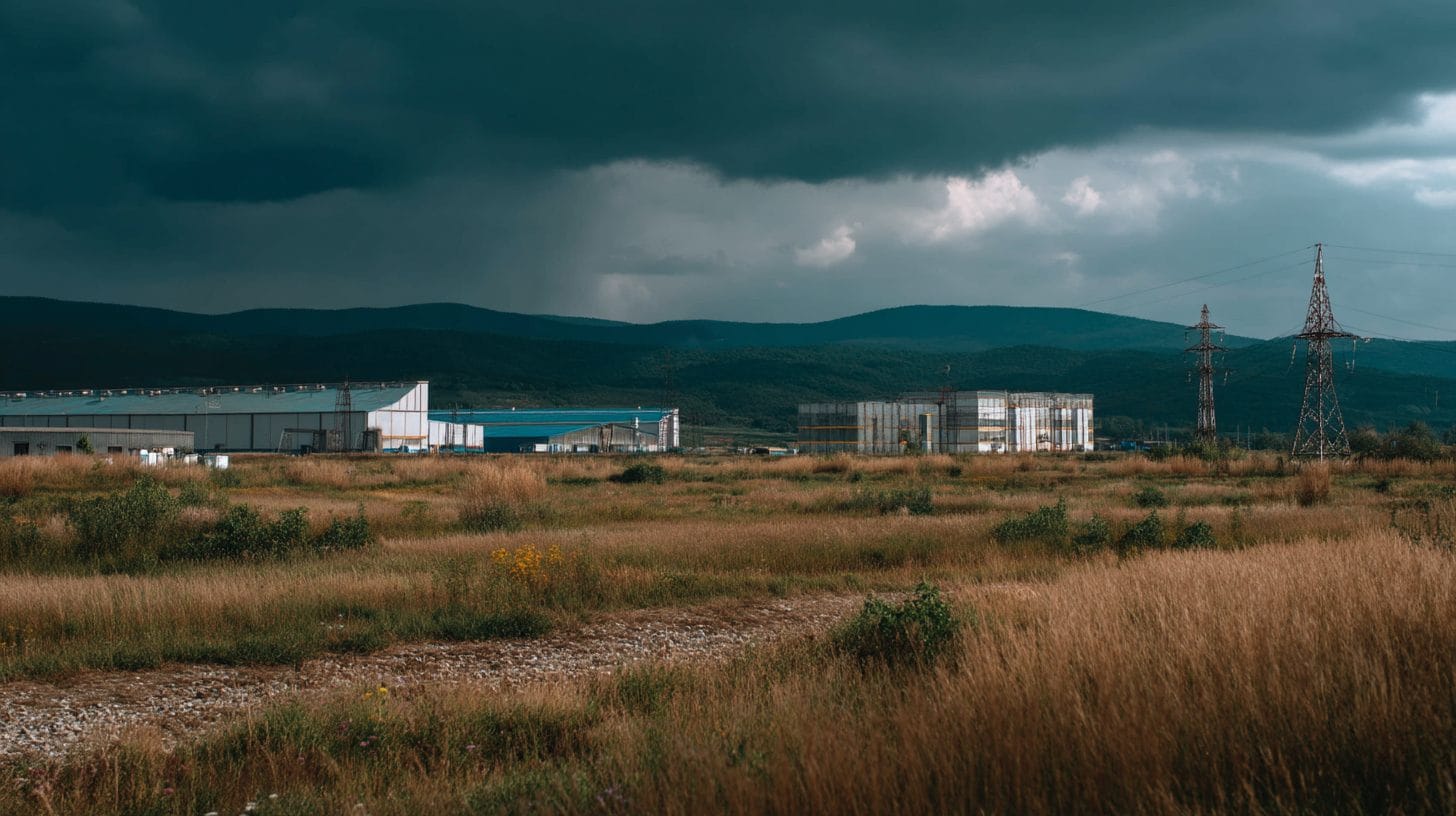
Galați, a port city located on the Danube River in eastern Romania, is increasingly attracting the attention of international investors seeking untapped potential in Eastern European real estate. For investors real estate in Galati offers a unique mix of strategic positioning, ongoing infrastructure development, and competitive entry prices, making it a compelling alternative to larger, saturated Romanian cities like Bucharest or Cluj-Napoca.
Situated near the border with Moldova and Ukraine, Galați is part of Romania’s economic corridor with access to European and Asian trade routes. While historically an industrial city, recent urban rejuvenation efforts and investment in logistics and infrastructure are shaping a new narrative: one of real estate growth and rising return on investment (ROI).
Current market prices and types of property available
Real estate prices in Galați remain significantly lower compared to Romania’s major urban hubs. In Q1 2024, the average price per square meter for residential apartments in Galați hovered around €1,150, making it one of the most affordable cities in the country. Newly built apartments, particularly in zones like Mazepa, Țiglina, and the Central District, tend to command slightly higher prices in the €1,300–€1,500 range, depending on view, finish quality, and access to amenities.
For commercial real estate, yields are particularly attractive. Retail and office spaces in central and high-traffic areas can generate gross yields between 7% and 9%, with rental rates ranging from €8 to €15 per square meter, depending on location and fit-out. Industrial properties, especially warehouses and logistics facilities near the port or city bypass, present noteworthy opportunities due to Galați’s position as a transportation and trade node along the Rhine–Danube Corridor.
Land investment in peripheral or semi-urban areas also offers room for high appreciation. Agricultural land around Galați averages €6,000–€9,000 per hectare, while buildable land just outside the city could range from €25 to €50 per square meter depending on zoning. Given Romania’s ongoing urban expansion and EU infrastructure alignment, such assets are poised for value growth in the medium to long term.
Yield potential and ROI trends
ROI for real estate in Galați varies based on asset type and holding strategy, but overall indicators remain favorable. For residential rental properties, net yields typically range between 5% and 6.5%, outperforming several Western European markets. Short-term rentals are less developed than in tourism hubs like Brașov or Sibiu, yet this segment is maturing slowly as business travel and cultural events return post-pandemic.
Commercial real estate in Galați, however, often delivers stronger and more stable returns. Logistics hubs benefit from rising demand driven by the expansion of regional e-commerce and increased cross-border trade. Galați’s proximity to the Moldova border and its access to the Danube ports make it a logical choice for companies looking to establish access further into Eastern Europe.
Well-positioned investors have also begun to see double-digit appreciation on development land over a 3–5 year horizon, particularly where zoning changes or government infrastructure projects are in place. As Romania continues to absorb EU cohesion funds and execute its National Recovery and Resilience Plan, local municipalities like Galați benefit from renovations to road systems, expanded utility grids, and digital connectivity—factors which contribute to an uplift in surrounding real estate value.
Key neighbourhoods and zones of interest
For residential investors, Galați presents several micro-markets worth evaluating. The Mazepa district offers high demand due to its location near the Danube promenade and proximity to schools, shops, and parks. This neighborhood has maintained price stability and shows strong tenant retention rates. Țiglina, slightly older but centrally located, is seeing incremental gentrification and infrastructure upgrades, translating into solid mid-term capital appreciation.
For industrial or mixed-use investments, the southwestern and southeastern outskirts—near the Port of Galați and along DN2B and DN26—offer excellent entry points. Several logistics park developments have already broken ground or are in advanced planning stages, supported by improved access roads and rail infrastructure.
Additionally, the area around the Galați–Brăila bridge (set for completion in 2025) is generating significant investor interest. The bridge, which will become the longest over the Danube in Romania, is expected to enhance Galați’s connectivity with the southern regions and facilitate greater mobility of both labor and goods. As accessibility improves, adjacent real estate is projected to appreciate substantially.
Infrastructure and macroeconomic drivers
Romania’s continued EU integration acts as a macroeconomic tailwind for cities like Galați. The government prioritizes regional economic development, and Galați is a key beneficiary due to its location within several trans-European transport corridors. Projects such as the modernization of the Danube inland waterway and EU-funded railway upgrades are increasing Galați’s value proposition for logistics and trade-linked real estate investments.
Energy transition and the Romanian government’s focus on “green” investments are becoming relevant in Galați as well. The nearby steel plant, Liberty Galați, is undergoing gradual greening, attracting EU attention and funds. This industrial shift not only drives regional employment but also supports demand for housing and services catering to a skilled, upwardly mobile workforce.
Foreign investor outlook and legal considerations
Foreign investors can purchase real estate in Romania with relative ease. While the ownership of agricultural land by non-EU citizens remains somewhat restrictive, buildable land and developed properties are fully accessible to EU citizens and to others via Romanian-registered companies. The tax landscape is favorable, with a flat corporate tax of 16%, competitive personal income tax rates, and relatively low property taxes compared to Western Europe.
Galați’s lower market maturity also translates into a less competitive acquisition environment. Unlike cities where bidding wars are common, properties in Galați can often be acquired at or under asking price, especially where legal clarity or due diligence identifies weak negotiation points.
While currency risk is relevant—the Romanian Leu (RON) is not pegged to the euro—banking and financial services are advanced, and many sellers accept euro-denominated transactions. Local legal and notary systems function reliably, and foreign investors are advised to work with bilingual law firms to ensure clarity in contract formulation and legal representation.
Conclusion
For investors real estate in Galati represents a grounded opportunity within Romania’s dynamic property market. With strategic geographic positioning, evolving infrastructure, and an underexploited residential and commercial landscape, Galați offers both yield and appreciation potential. As Romania strengthens its role within the EU and upgrades its regional economies, second-tier cities like Galați are poised to outperform in terms of medium-term real estate ROI.
Foreign investors seeking geographic diversification in emerging European markets would do well to consider Galați—not only for its affordability but for the layered macro-trends that support long-term value creation.
Interested in Land Investment in Romania?
We specialize in high-yield land and property opportunities for serious investors.
VIEW OUR CURRENT PORTFOLIOSecure your investment with Land For Investors.

Published: January 20, 2026