

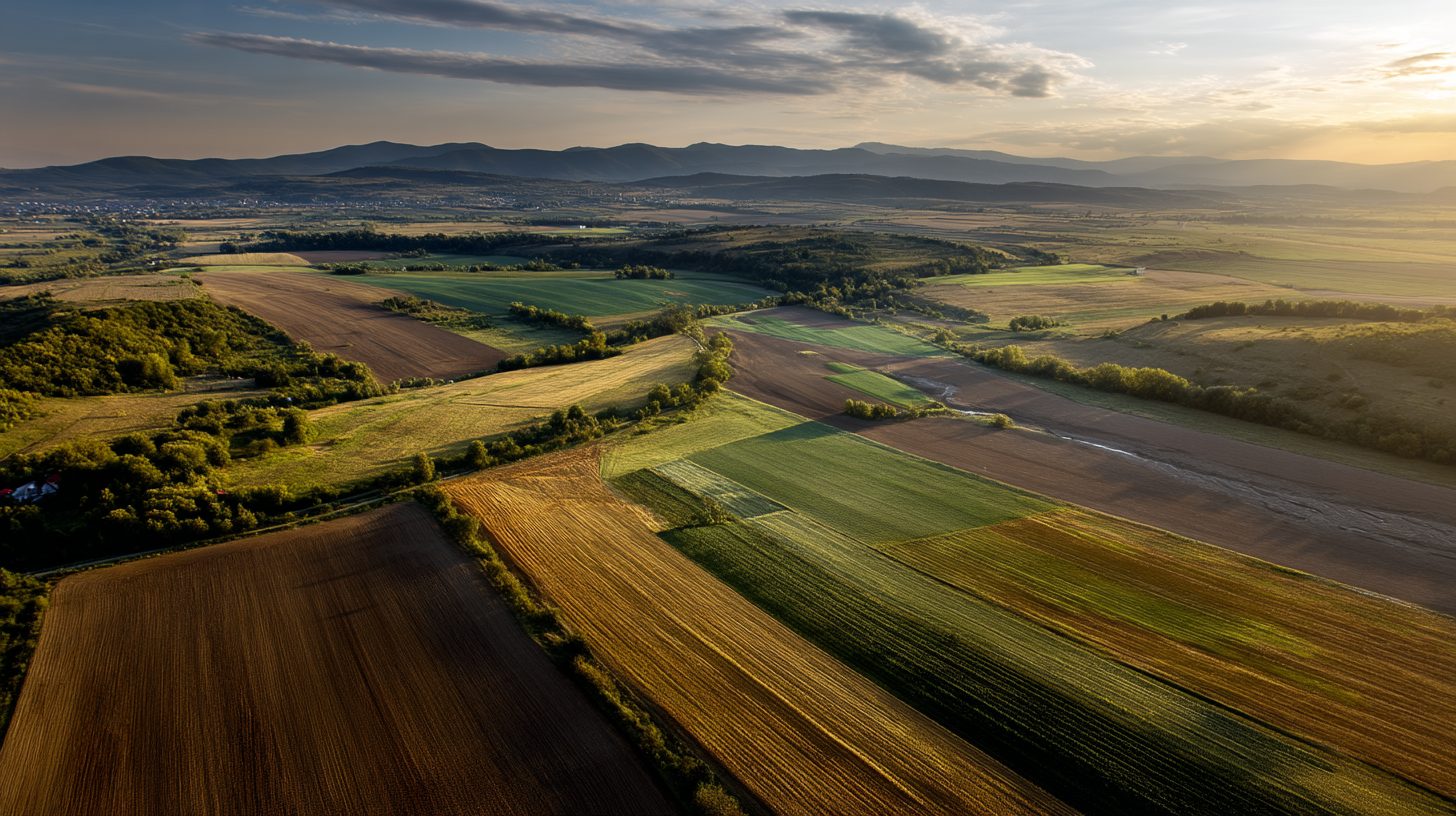
Farmland in Timisoara has emerged as a compelling asset class for investors seeking exposure to Romania’s growing agricultural sector and real estate market. Strategically situated in western Romania, close to the Hungarian and Serbian borders, Timisoara not only boasts a stable macroeconomic environment but also benefits from excellent transport infrastructure and a vibrant local economy. For investors, farmland in Timisoara presents a confluence of factors that combine regional agricultural strengths with long-term capital appreciation potential.
Location advantages of Timisoara
Timisoara is the capital of Timiș County and one of the most economically advanced cities in Romania. Its location in the Banat region places it among the most fertile agricultural areas in the country, historically known for producing grains, oilseeds, and industrial crops. The region’s flat terrain and rich black soil allow for intensive farming practices and support high agricultural yields.
This geographic advantage is further enhanced by infrastructure connectivity. Timisoara is well-integrated into national and international transport networks, with access to the A1 motorway, the European E70 corridor, and proximity to the Timisoara Traian Vuia International Airport. These logistics capabilities facilitate the distribution of agricultural goods and enhance land liquidity for investors.
Furthermore, the city’s position near the borders with Hungary and Serbia positions it within a regional trade network that benefits from bilateral agreements and EU membership, offering additional cross-border investment opportunities.
Agronomic potential and climate considerations
Timisoara’s farmland is characterized by its high chernozem content—some of the most productive soil types in Europe. With an ideal mixture of organic matter and excellent water retention properties, these soils enable the sustainable cultivation of cereals such as wheat, barley, and maize. The region has also seen an increase in sunflower and soybean cultivation due to favorable weather patterns and relevant subsidies under the EU’s Common Agricultural Policy.
The local climate is continental, with mild winters and warm summers, offering a long growing season and reducing risks associated with frost or extreme drought compared to more arid regions. Advances in irrigation infrastructure—combined with Romania’s accession to EU agricultural grants—make large-scale commercial farming increasingly viable and attractive to investors.
Land price trends and market dynamics
Compared to Western European markets, the average price per hectare of farmland in Romania remains among the lowest in the EU. In Timisoara and its surrounding areas, land prices have shown a steady upward trajectory for the past decade, reflecting growing local demand, stronger land consolidation efforts, and improved foreign investor confidence.
In 2023, farmland prices around Timisoara ranged between €6,000 and €10,000 per hectare, depending on proximity to urban zones, irrigation availability, and parcel sizes. While marginally higher than in other parts of Romania, these rates still offer substantial value in a region undergoing sustained agricultural modernization.
The continued liberalization of Romania’s land market has also facilitated smoother transactions for EU and non-EU investors. Legal reforms have simplified foreign ownership processes, provided land is used for agricultural or investment purposes. Additionally, the need for larger, consolidated plots presents an opportunity for early entrants to acquire and structure expansive farmland portfolios before prices become prohibitive.
Investment strategies and target sectors
Timisoara’s farmland market is suitable for several investment strategies, depending on capital allocation, investment horizon, and risk appetite. Passive investors may seek to lease the land to local farmers or agricultural businesses, generating annual rental yields between 3% and 5%, while capitalizing on long-term land appreciation.
For those interested in active investment, Romania offers robust support for agribusiness development—a direction that continues to gain traction among foreign investors. This involves direct investment in crop production, greenhouse farming, or agritech integration. The return potential for vertically integrated agricultural enterprises is considerably higher, especially if combined with export capabilities.
There is also growing attention toward organic farming and sustainable agriculture practices. EU funding schemes and increased consumer demand for organic produce provide a framework for investors to incorporate ESG (Environmental, Social, Governance) goals in their land use models.
Risks and considerations for foreign investors
While the Romanian farmland market offers many benefits, investors should not underestimate the importance of due diligence. Land fragmentation remains a persistent challenge in rural areas, making it essential to conduct thorough cadastral verification before acquisition. Not all farmland parcels have clear ownership titles or updated property registrations, which can delay transactions.
Navigating Romanian zoning laws and local bureaucracy may also require the support of local legal and agricultural consultants. A well-structured legal approach can mitigate risks related to land use changes, inheritance claims, or environmental regulations.
Investors must also factor in Romania’s evolving land laws, especially those concerning the acquisition of agricultural land by foreign entities. While recent legal shifts have reaffirmed Romania’s status as an open land market under EU reciprocity rules, compliance with national strategic interest guidelines remains imperative.
Macroeconomic backdrop and EU integration
Romania’s status as an EU member state brings significant financial and structural advantages. This includes access to direct subsidies under the Common Agricultural Policy (CAP), which support both landowners and tenants across the agricultural value chain. These subsidies incentivize good agricultural practices, crop diversification, and land enhancement.
Moreover, Romania’s economic indicators remain favorable, with stable GDP growth, low inflation, and infrastructural development being actively pursued through EU-backed regional development programs. The government has committed to modernizing rural infrastructure—roads, irrigation canals, and logistics hubs—directly benefiting farmland owners and agri-investors.
The broader investment narrative is also supported by demographic and consumption trends. As urbanization accelerates across Europe, and arable land becomes increasingly scarce, the value of productive farmland as a real asset class continues to rise. In this context, farmland in Timisoara serves as both a hedge against inflation and a long-term high-potential investment.
Conclusion
For investors, farmland in Timisoara stands at the intersection of agronomic potential, strategic location, and market accessibility. With rising EU land prices and growing demand for sustainable agriculture, Timisoara offers a unique opportunity to secure valuable assets in a region supported by favorable climatic conditions, skilled agricultural labor, and improving trade infrastructure.
Careful project planning, alongside experienced local guidance, can unlock the full investment potential of Timisoara farmland—whether through leasing, operational farming, or land banking strategies. As Romania continues to modernize its agricultural sector and enhance rural infrastructure, well-positioned land investments in and around Timisoara are poised for future growth and stability.
Interested in Land Investment in Romania?
We specialize in high-yield land and property opportunities for serious investors.
VIEW OUR CURRENT PORTFOLIOSecure your investment with Land For Investors.

Published: January 20, 2026