

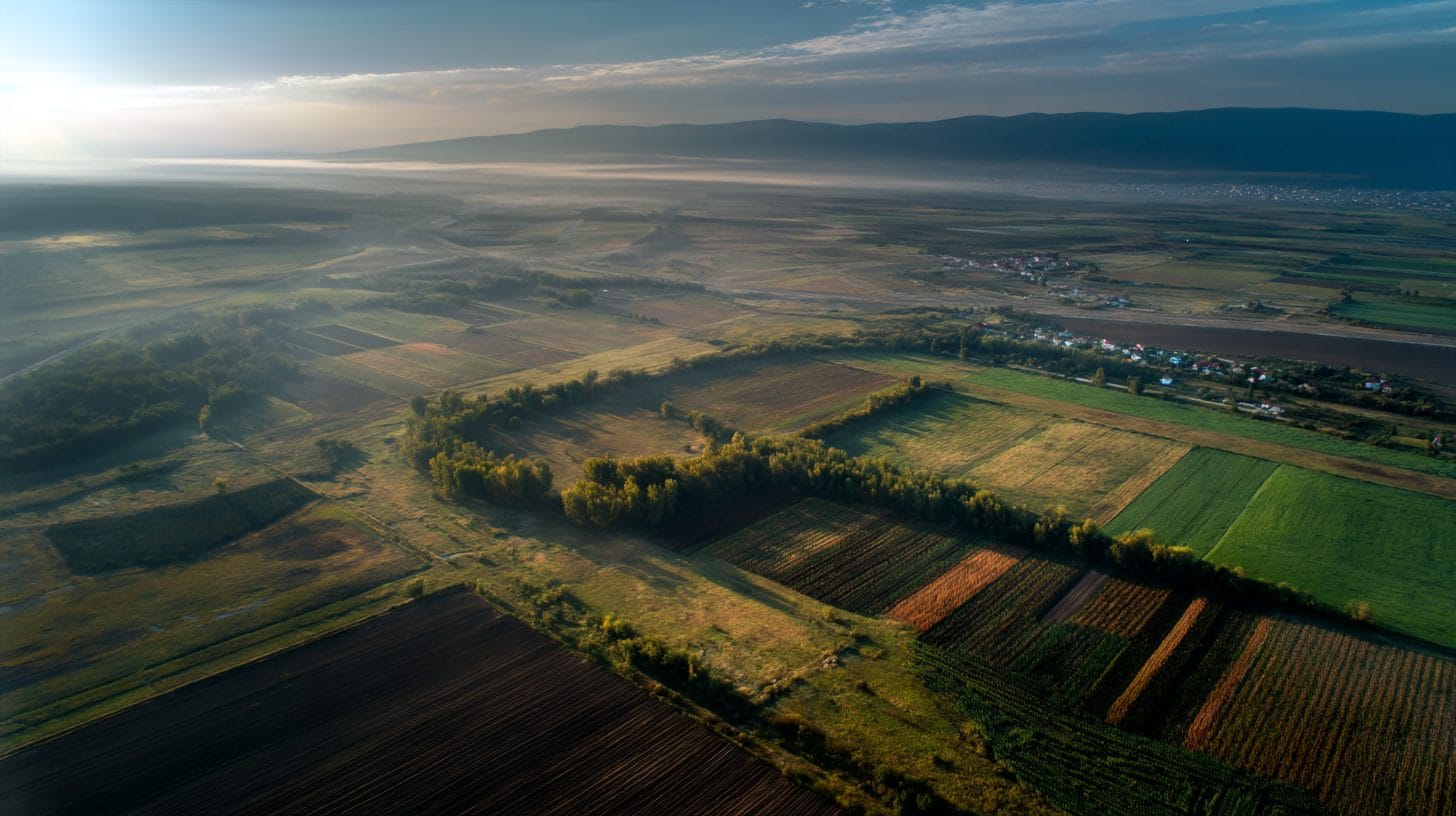
Using Satellite Imagery to Research Land on Bucharest’s Ring Road
In recent years, satellite imagery has emerged as a crucial tool for urban planning, environmental monitoring, and geographical research. As cities like Bucharest continue to expand and evolve, the need for accurate, up-to-date data becomes increasingly vital. In particular, the area surrounding Bucharest’s Ring Road has seen significant development, prompting a closer examination of land use, land cover changes, and urban sprawl. This article delves into how satellite imagery can be effectively utilized to study land on Bucharest’s Ring Road, addressing the methodologies, benefits, and implications of this research.
The Importance of Bucharest’s Ring Road
Bucharest’s Ring Road, known as the “Bulevardul Principal,” functions as a critical transportation artery that encircles the city. Completed in stages over several decades, it plays a pivotal role in managing traffic flow, connecting various districts, and facilitating development in the metropolitan area. The land surrounding the Ring Road has become a hotspot for residential and commercial projects, prompting increased scrutiny on how these developments impact the environment and urban dynamics.
With the rapid growth of urban areas, researchers and city planners face significant challenges. These include understanding land cover changes, monitoring urban heat islands, assessing green spaces, and evaluating the ecological impact of new developments. Satellite imagery provides a powerful solution to these challenges, offering a comprehensive overview of land use patterns and enabling precise analysis.
Utilizing Satellite Imagery for Land Research
Satellite imagery refers to the technology used to capture images of the Earth’s surface from space. This method of data collection enhances traditional land research methodologies by providing high-resolution images, time-series data, and detailed geographical information. For research focused on land surrounding Bucharest’s Ring Road, several specific methodologies can be employed.
1. **Remote Sensing Techniques**: Remote sensing is the process of obtaining information about objects or areas from a distance, typically using satellite or aerial imagery. Various sensors capture light reflectance from the Earth’s surface, allowing researchers to classify land cover types, monitor environmental changes, and assess land use practices. In the context of Bucharest’s Ring Road, remote sensing can illuminate patterns of urbanization, transportation infrastructure development, and landscape alterations.
2. **Change Detection Analysis**: By comparing satellite images taken at different times, researchers can detect changes in land use and land cover over time. Analyzing differences in vegetation, built-up areas, and water bodies can help identify trends in urban sprawl on Bucharest’s Ring Road. This method is particularly useful in assessing the rates and impacts of new constructions and their implications for urban environments.
3. **Geographical Information Systems (GIS)**: GIS plays a vital role in synthesizing satellite imagery with other geographical data. By layering satellite imagery over geographical maps, urban planners and researchers can visualize land distribution, zoning areas, and transportation networks. In the case of Bucharest’s Ring Road, GIS can aid in understanding the relationship between urban development and environmental sustainability, facilitating more informed policy-making.
Benefits of Using Satellite Imagery for Land Research
The application of satellite imagery in the study of land on Bucharest’s Ring Road offers a multitude of benefits. One of the most significant advantages is the ability to gather spatial data over large areas quickly and cost-effectively. Unlike traditional land surveys, which can be labor-intensive and time-consuming, satellite imagery allows for near real-time analysis, enabling planners and researchers to remain agile in decision-making processes.
Moreover, satellite imagery provides an objective view of land use patterns, minimizing subjective biases that can affect on-the-ground assessments. The precision and accuracy of these images facilitate a deeper understanding of land dynamics, such as settlement growth, infrastructure changes, and the degradation of natural resources. As environmental concerns become increasingly pressing in urban areas, satellite imagery serves as an invaluable tool for monitoring changes in green spaces and biodiversity along Bucharest’s Ring Road.
Implications for Urban Planning and Policy Making
The insights gained from satellite imagery research can significantly inform urban planning and policy-making in Bucharest. By providing a clear picture of land use and development patterns, city officials can make data-driven decisions that balance growth and sustainability. Furthermore, the analysis of satellite imagery can highlight areas at risk of environmental degradation, allowing for targeted intervention to protect valuable ecosystems and green spaces.
Additionally, satellite imagery can support public engagement in urban planning processes. By visualizing potential developments and impacts through accessible imagery, stakeholders—including residents, businesses, and local organizations—can better understand proposed changes to their environment. This transparency helps foster cooperation among community members and policymakers, leading to more inclusive and sustainable urban development strategies.
Challenges and Limitations of Satellite Imagery Research
While satellite imagery serves as a powerful research tool, it is not without its challenges. One limitation is the resolution of the images captured; some satellite systems may not provide sufficient detail for specific applications. High-resolution imagery can be costly, which may pose budgetary challenges for some research initiatives. Additionally, variations in atmospheric conditions can affect the clarity and accuracy of satellite images, necessitating sophisticated image-processing techniques.
Furthermore, effective interpretation of satellite imagery requires considerable expertise in remote sensing and geographical analysis. Researchers must have a strong understanding of the technologies used and the methodologies for changing land covers to capitalize on the full potential of satellite data.
Conclusion
The utilization of satellite imagery for researching land on Bucharest’s Ring Road presents a promising avenue for understanding urban development, land use changes, and ecological impacts. By harnessing the power of remote sensing, researchers and urban planners can gain invaluable insights that contribute to sustainable growth and informed policy-making. As Bucharest continues to evolve, the application of satellite imagery in land research will remain essential in maintaining a balance between urbanization and environmental preservation. It is evident that through careful analysis and strategic implementation, satellite imagery can be an indispensable resource in shaping the future of Bucharest and its surroundings.
Interested in Land Investment in Romania?
We specialize in high-yield land and property opportunities for serious investors.
VIEW OUR CURRENT PORTFOLIOSecure your investment with Land For Investors.

Published: March 23, 2025