

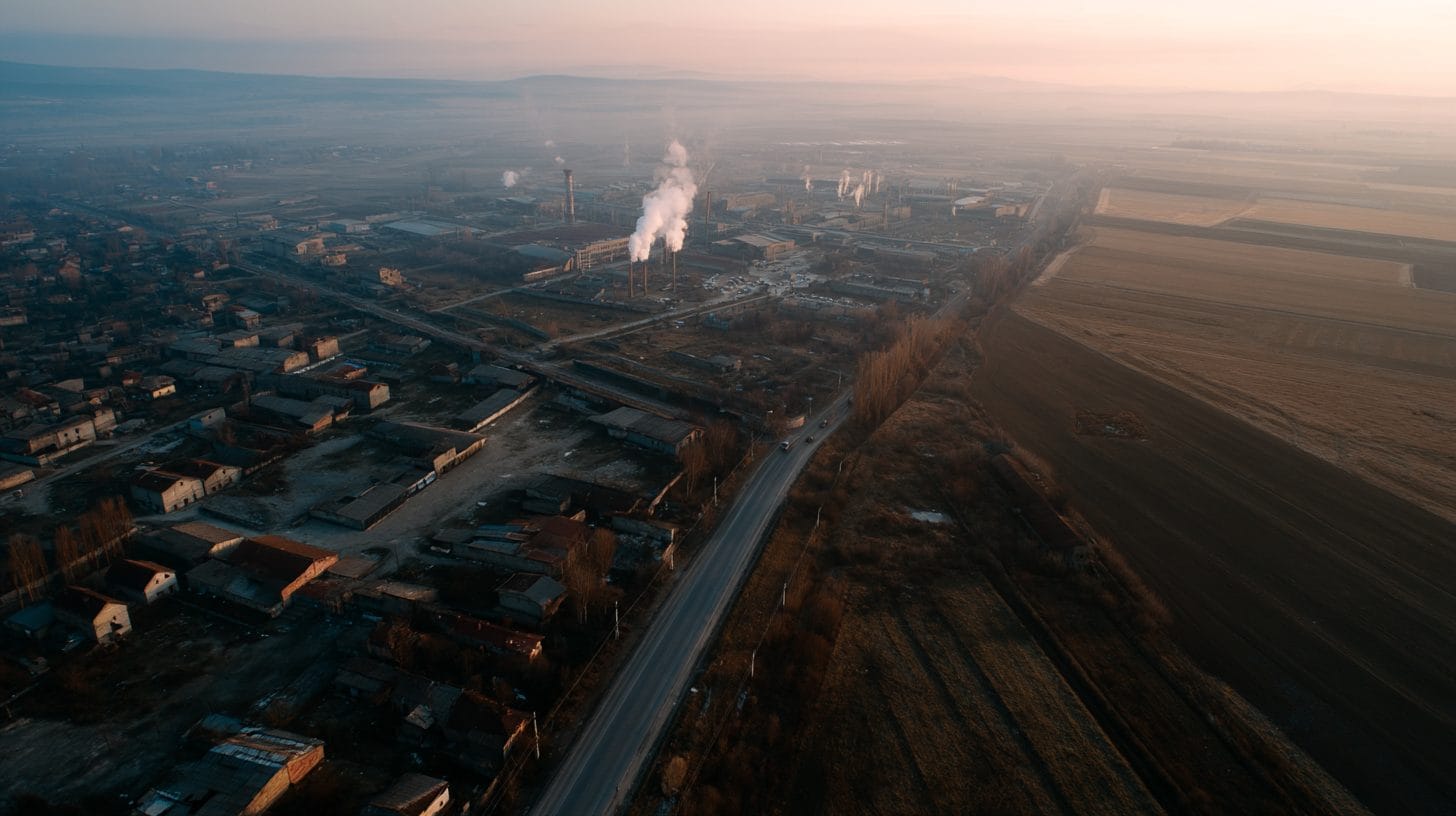
Using Satellite Imagery to Research Land in Clienceni, Ilfov
The advent of technology has transformed the way researchers study and interact with land. Among the innovations that have significantly impacted land research, satellite imagery has emerged as a pivotal tool. In Clienceni, Ilfov, the application of satellite imagery in land research is opening new avenues for understanding land use, environmental changes, and urban planning. These insights are vital as Clienceni, a locality situated close to Bucharest, continues to experience rapid development.
Understanding the Landscape of Clienceni in Ilfov
Clienceni is located in the Ilfov County, an area characterized by its strategic proximity to Romania’s capital, Bucharest. The development dynamics of the region are influenced by factors such as urban sprawl, agricultural activities, and infrastructural evolution. As these changes unfold, researchers increasingly rely on satellite imagery for a granular understanding of land use patterns across Clienceni.
Satellite imagery, which captures high-resolution images of the Earth’s surface, provides researchers with a unique perspective on the land. By analyzing this imagery, scholars and practitioners can identify and examine land cover types, track changes over time, and assess the impact of human activities on the environment.
The Benefits of Satellite Imagery in Land Research
One of the standout features of satellite imagery is its capability to deliver comprehensive data over large areas. In the context of Clienceni, the use of satellite imagery allows researchers to visualize land transformations across multiple dimensions, including urban development, agricultural expansion, and changes in natural landscapes. This comprehensive view is critical for urban planners, environmentalists, and policymakers involved in sustainable development.
Moreover, satellite imagery facilitates the monitoring of land use change over time, providing historical data that can be invaluable in forecasting future trends. It allows for the assessment of specific land features, including vegetation coverage, soil types, and water bodies, which can influence decision-making processes regarding land management.
Applications of Satellite Imagery in Clienceni
The applications of satellite imagery in Clienceni are diverse and impactful. Researchers utilize this technology to conduct various analyses, including land cover classification, change detection, and land use planning. Land cover classification involves categorizing the different types of land uses seen in the imagery, such as residential areas, agricultural fields, and natural habitats. This classification is essential for understanding how land is utilized and can inform policy decisions regarding land development.
Change detection is another vital application of satellite imagery in Clienceni, where researchers can compare images taken at different times to identify significant changes in land use or environmental conditions. This technique can reveal critical insights such as urban sprawl, deforestation, and changes in agricultural practices, which are crucial for maintaining sustainable development in the region.
Additionally, satellite imagery aids in land use planning by providing data-driven insights that support effective infrastructure development. Understanding the geographical layout through satellite imagery assists urban planners in making informed decisions about transportation networks, residential zones, and green spaces, thereby optimizing land use in Clienceni.
Technological Advancements Enhancing Satellite Imagery
The continuous development of satellite technology is enhancing the quality and accessibility of satellite imagery for land research. High-resolution imagery provides clearer and more precise data, which is increasingly important as the demand for detailed land analysis grows. Moreover, advancements in artificial intelligence and machine learning are facilitating quicker analysis of satellite images, allowing researchers to process vast amounts of data efficiently.
Open-source satellite imagery platforms, such as NASA’s Landsat program and the European Space Agency’s Sentinel missions, offer free access to extensive datasets that researchers in Clienceni can leverage for their studies. The democratization of this data is instrumental in enabling a wider range of stakeholders, including local authorities, environmental NGOs, and academic institutions, to engage in land research efforts.
Future Prospects of Satellite Imagery in Clienceni
The future of satellite imagery in land research within Clienceni, Ilfov, appears promising. With ongoing advancements in satellite technology and data analytics, researchers will be capable of accessing even more refined datasets, permitting deeper insights into land dynamics. Collaborations between academic institutions, government bodies, and private organizations can enhance research efforts and lead to the development of innovative land management strategies.
Moreover, as environmental awareness continues to grow, the role of satellite imagery in monitoring climate change impacts will become increasingly vital. Researchers in Clienceni can utilize this technology to study the effects of climate change on land use patterns, aiding in the creation of adaptive strategies to mitigate adverse effects.
Conclusion
In conclusion, the use of satellite imagery to research land in Clienceni, Ilfov, is an invaluable asset for understanding and managing the region’s rapidly changing landscape. By providing comprehensive insights into land use patterns, environmental changes, and urban infrastructure developments, satellite imagery plays a crucial role in informing decision-making processes. With technological advancements enhancing the quality and accessibility of satellite data, the possibilities for land research in Clienceni are expanding significantly. As stakeholders continue to harness the power of satellite imagery, the potential for optimized land management and sustainable development in this region grows ever brighter. In this era of technological evolution, utilizing satellite imagery for land research in Clienceni, Ilfov, represents a strategic approach to nurturing the area’s growth while safeguarding its environmental integrity.
Interested in Land Investment in Romania?
We specialize in high-yield land and property opportunities for serious investors.
VIEW OUR CURRENT PORTFOLIOSecure your investment with Land For Investors.

Published: March 18, 2025