

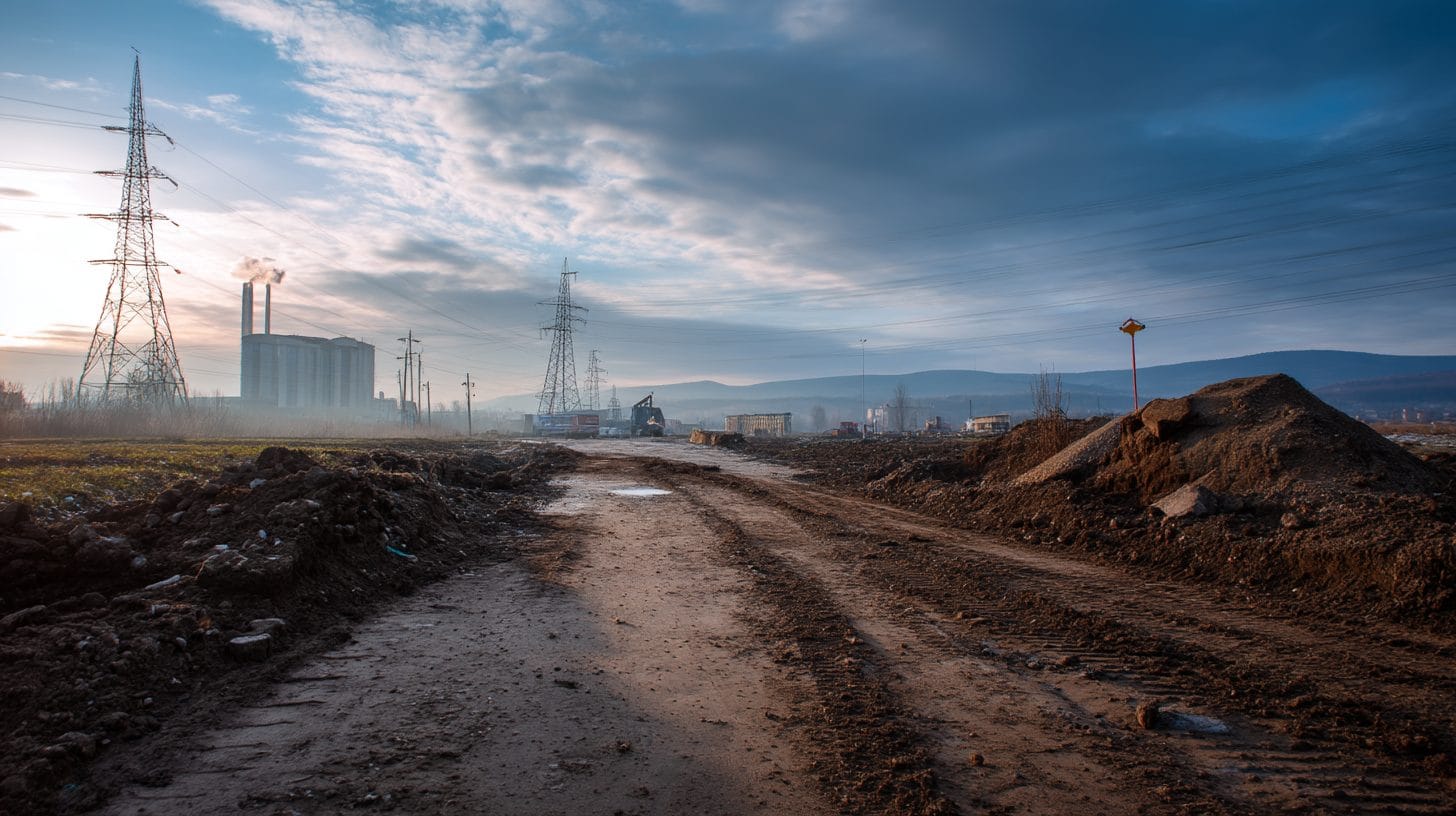
As Romania continues its shift toward renewable energy, Cluj County has emerged as one of the most strategically significant regions for solar power investment. Located in the heart of Transylvania, Cluj boasts a combination of geographic, infrastructural, and economic factors that make it particularly appealing for investors seeking optimal returns from photovoltaic energy. Identifying solar farm land best in Cluj requires a keen understanding of market dynamics, current land prices, return on investment (ROI) potential, and long-term trends in the Romanian energy sector.
Market demand for solar land in Cluj
Driven by both EU directives and Romania’s national energy strategy, solar energy has gained serious momentum in recent years. Cluj County stands out for its well-developed infrastructure, proximity to energy grids, and above-average solar irradiance for a region that is not part of the southern sunbelt.
The increase in solar energy demand has led to a rising appetite among both national and foreign investors for suitable land. Agricultural land conversion laws have become more accommodating, particularly when land is classified as degraded or low-productivity. This regulatory flexibility, combined with the region’s political stability and investor-friendly business climate, makes Cluj one of the best counties in Romania for solar asset deployment.
Understanding current land prices
The price of land suitable for solar farm development in Cluj varies widely depending on several factors, such as zoning status, distance to the nearest electrical substation, and land access. As of early 2024, undeveloped but grid-adjacent land with favorable zoning typically ranges from €4 to €10 per square meter.
Premium parcels located near high-voltage transmission nodes or within industrial areas fetch even higher prices, sometimes reaching €15 or more per square meter. In contrast, land farther from substations or with poor access roads may dip to €3 per square meter but require significant investment in infrastructure upgrades.
It is worth noting that Romania categorizes its agricultural land from Class I to Class V, with Class V being the least productive and most cost-effective for solar use. Investors generally target Class IV and V lands as they come with fewer restrictions and lower per-hectare acquisition costs.
Return on investment calculations
ROI for solar farms in Cluj should be evaluated over a 20 to 25-year horizon, aligning with the operational lifespan of most photovoltaic panels. On average, a 1 MW solar farm in the region requires approximately 1.5 to 2 hectares of land and capital investment of €700,000 to €1 million, depending on site access and grid connectivity costs.
The typical annual yield in Cluj ranges between 1,100 and 1,300 MWh per installed MW, driven by moderate but stable irradiation levels. At an average feed-in tariff or market rate of €90 per MWh, a solar farm could generate between €99,000 to €117,000 in annual gross revenue per MW. With operating costs estimated at €10,000 to €15,000 annually, this results in net annual returns between €84,000 and €102,000 per MW, representing a payback period of roughly 7 to 9 years.
In legislative terms, Romania’s Contracts for Difference (CfD) mechanism under development is expected to further reduce revenue volatility, potentially increasing investor appetite and compressing ROI timelines.
Key areas within Cluj for solar investments
Savvy investors searching for solar farm land best in Cluj should pay attention to several high-potential micro-markets within the county:
– Turda and Câmpia Turzii: These areas offer flat topography, favorable zoning, and proximity to high-capacity substations.
– Apahida and Jucu: Near Cluj-Napoca airport and industrial parks, these zones provide access to infrastructure and a skilled workforce, boosting interest in large-scale energy investments.
– Gherla and Dej: Northeastern Cluj locations where land prices remain competitive, yet grid access and development regulations have improved significantly.
In these sub-regions, land parcels of 5 hectares or more with existing feasibility studies and environmental permits are increasingly in demand. Some local municipalities are also engaging in public-private partnerships, offering long-term lease options on communal land, which can be especially attractive to foreign institutional investors.
Regulatory and permitting considerations
Navigating Romania’s regulatory environment requires local legal knowledge, especially regarding land conversion, environmental impact assessments, and grid injection rights. Romanian authorities have streamlined several permitting processes, but title verification and land ownership clarification can still pose challenges.
Additionally, new regulations under Romania’s Integrated National Energy and Climate Plan (INECP) prioritize renewable generation, allowing for faster environmental permitting for solar projects under a specified capacity. Investors should also monitor updates to the Land Law (Legea Funciară), which governs conversion of agricultural use to industrial or energy development purposes.
The role of local partnerships and due diligence
Foreign investors benefit greatly from local partnerships, whether through legal firms, engineering consultants, or land acquisition intermediaries. Conducting comprehensive due diligence, including grid feasibility studies and cadastral inspections, is essential to avoid costly setbacks.
Furthermore, sourcing land with pre-approved grid connection or with ready-to-build status significantly expedites project timelines, thus enhancing financial viability. Collaborating with established Romanian EPC (engineering, procurement, and construction) firms that understand local regulations can further streamline development and improve post-build support.
Long-term outlook and opportunities
The long-term outlook for land acquisition for solar investment in Cluj is positive, bolstered by the EU’s Green Deal, Romania’s commitment to increase renewable capacity, and growing corporate demand for clean energy purchase agreements. The Romanian Energy Regulatory Authority (ANRE) and Transelectrica continue to expand internal grid capacity, which could unlock more marginal lands for viable solar use in the coming years.
Additionally, with battery storage and hybrid renewable models gaining traction, the potential value of solar farm land in Cluj may increase beyond its current utility. Investors considering a multi-phase approach — starting with photovoltaic and later integrating storage or agrovoltaic systems — can unlock higher returns over time.
In conclusion, Cluj stands out as one of Romania’s most lucrative regions for solar farm development. Land availability, improving regulatory conditions, and stable energy yields create a strong business case for long-term investment. Thorough due diligence, strategic site selection, and alignment with national energy policy trends can position investors to secure high returns while contributing to Romania’s sustainable energy future.
Interested in Land Investment in Romania?
We specialize in high-yield land and property opportunities for serious investors.
VIEW OUR CURRENT PORTFOLIOSecure your investment with Land For Investors.

Published: January 20, 2026