

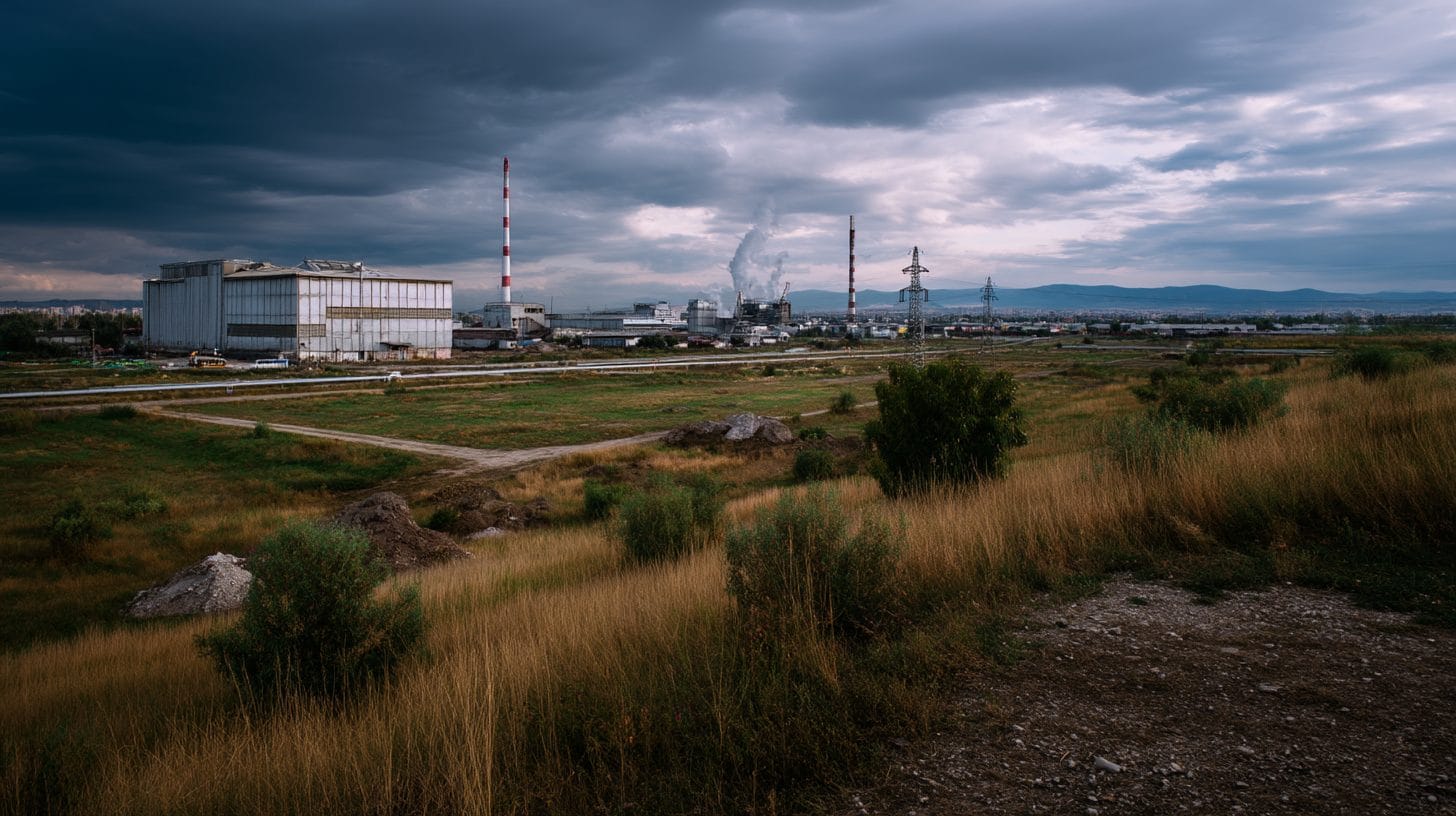
When evaluating the opportunities for a long term investment in agricultural land in Dobrogea, Romania, investors should consider a combination of factors including geographic advantages, climate conditions, infrastructure, market access, and legal aspects. Dobrogea, positioned between the Danube River and the Black Sea, offers one of the most promising landscapes for agricultural development in Southeastern Europe. Its unique strategic position and fertile soil create strong fundamentals for long-term capital appreciation and sustained annual yields.
Strategic Geography and Agro-Climatic Advantages
Dobrogea spans two counties—Constanța and Tulcea—and encompasses a diverse agricultural zone characterized by fertile chernozem soils, lowland plains, and a temperate-continental climate with warm summers. These natural conditions support a wide range of crops, from cereals like wheat and barley to sunflowers, rapeseed, maize, and even vineyards and orchards. The average annual precipitation is relatively low but remains sufficient for cereal production, while increasing demand for irrigation boosts the value of lands with access to water reserves.
The proximity to the Black Sea provides a critical logistical advantage. Constanța Port, the largest port on the Black Sea and one of the biggest in Europe, serves as a major export hub for Romanian agricultural goods. This direct access to maritime routes makes Dobrogea not only pivotal for domestic agri-markets but also highly relevant for international trade—an attractive feature for multinational investors aiming to diversify portfolios across emerging European farmland.
Infrastructure and Investment Readiness
One of the key reasons Dobrogea stands out for agricultural land investment is its well-developed infrastructure. The A2 motorway connects the region directly to Bucharest and the rest of Romania, facilitating efficient transport of produce both inland and to export terminals. Furthermore, Constanța International Airport and regional railway hubs serve as a backbone for scalable agri-logistics.
Investors will also find that land fragmentation, a common challenge in other parts of Romania, tends to be less severe in Dobrogea. There are more consolidated plots or clusters of parcels available for sale, which is ideal for establishing medium to large-scale farming operations. The Romanian legal framework now also offers more clarity and stability regarding foreign land acquisitions, with improvements in land registration and title verification in this part of the country.
Local Market Trends and Land Price Dynamics
Compared to western Romania or the south-central plains, agricultural land in Dobrogea has traditionally held a lower price per hectare, with average rates currently ranging between €4,000 and €6,500 depending on proximity to infrastructure and irrigation access. However, prices are rising steadily as domestic and foreign investors increasingly target this region for its combination of productivity and geostrategic advantage. In recent years, Dobrogea has witnessed a growing influx of institutional investment, particularly in large-scale arable farming and irrigated agriculture.
Over a 10- to 15-year horizon, analysts predict continued appreciation in land values due to increasing global food demand, the EU’s Common Agricultural Policy subsidies, and Romania’s role as a high-yield supplier in Eastern Europe. With interest rates stabilizing in the EU, land purchases are showing renewed momentum as inflation-resistant, cash-generating assets.
Sustainability and Agritech Integration
A notable trend in Dobrogea is the rising interest in sustainable agriculture and digital farming technologies. The region’s openness to agritech makes it particularly appealing for investors looking to integrate drones, precision irrigation, satellite monitoring, and AI-powered field diagnostics into their business models. Dobrogea’s relatively flat topography and consistent crop yields create a favorable testing ground for such innovations, potentially driving up lease values and accelerating ROI for forward-thinking investors.
Sustainability also plays a central role in meeting EU environmental benchmarks, which will be crucial for maintaining eligibility for subsidies. This makes the long term investment in agricultural land in Dobrogea not only economically rational but also aligned with regulatory trends that reward low-carbon, efficient agricultural practices.
Risks and Regulatory Environment
As with any international land acquisition, investing in Romanian farmland requires diligence on legal and administrative matters. The foreign ownership of land in Romania is now permissive for EU citizens and companies, but non-EU investors must operate through a registered Romanian entity. Proper legal guidance is essential to ensure title clarity and compliance with zoning, environmental, and taxation regulations.
Changes in agricultural policy or subsidy structures could impact profitability in the medium term. Moreover, climate variability, while currently favorable in Dobrogea, remains a variable to watch, particularly concerning water availability. Investors should evaluate lands with existing irrigation systems or potential access to water under regional development projects.
Comparative Advantages over Other Agricultural Regions in Romania
While Southern Muntenia and parts of Western Romania have also attracted attention, Dobrogea stands out due to its export-driven orientation and operational efficiencies. The presence of the Black Sea corridor gives it superior logistics, and the relatively large, cultivable plots mean that scaling operations is more feasible without excessive consolidation efforts. These regional characteristics make Dobrogea better aligned with high-efficiency, export-focused agri-business models.
For those focused on portfolio diversification, long-term capital appreciation, and recurring income, Dobrogea meets all critical investment criteria. The steady rise in land transactions driven by institutional actors further suggests that the region is transitioning from an early-stage development zone into a primary agricultural investment hub in Romania.
Conclusion
Dobrogea offers a compelling case for a long term investment in agricultural land, underpinned by strong geographical advantages, improving infrastructure, and favorable market trends. With consolidation of parcels, access to international trade routes, sustainable farming adoption, and rising buyer demand, the region is poised for further growth in value and productivity. Foreign investors seeking solid agricultural assets in the European Union should watch Dobrogea closely—not only for its current profitability metrics, but also for the long-term strategic positioning it offers within Eastern Europe’s agricultural landscape.
Interested in Land Investment in Romania?
We specialize in high-yield land and property opportunities for serious investors.
VIEW OUR CURRENT PORTFOLIOSecure your investment with Land For Investors.

Published: January 20, 2026