

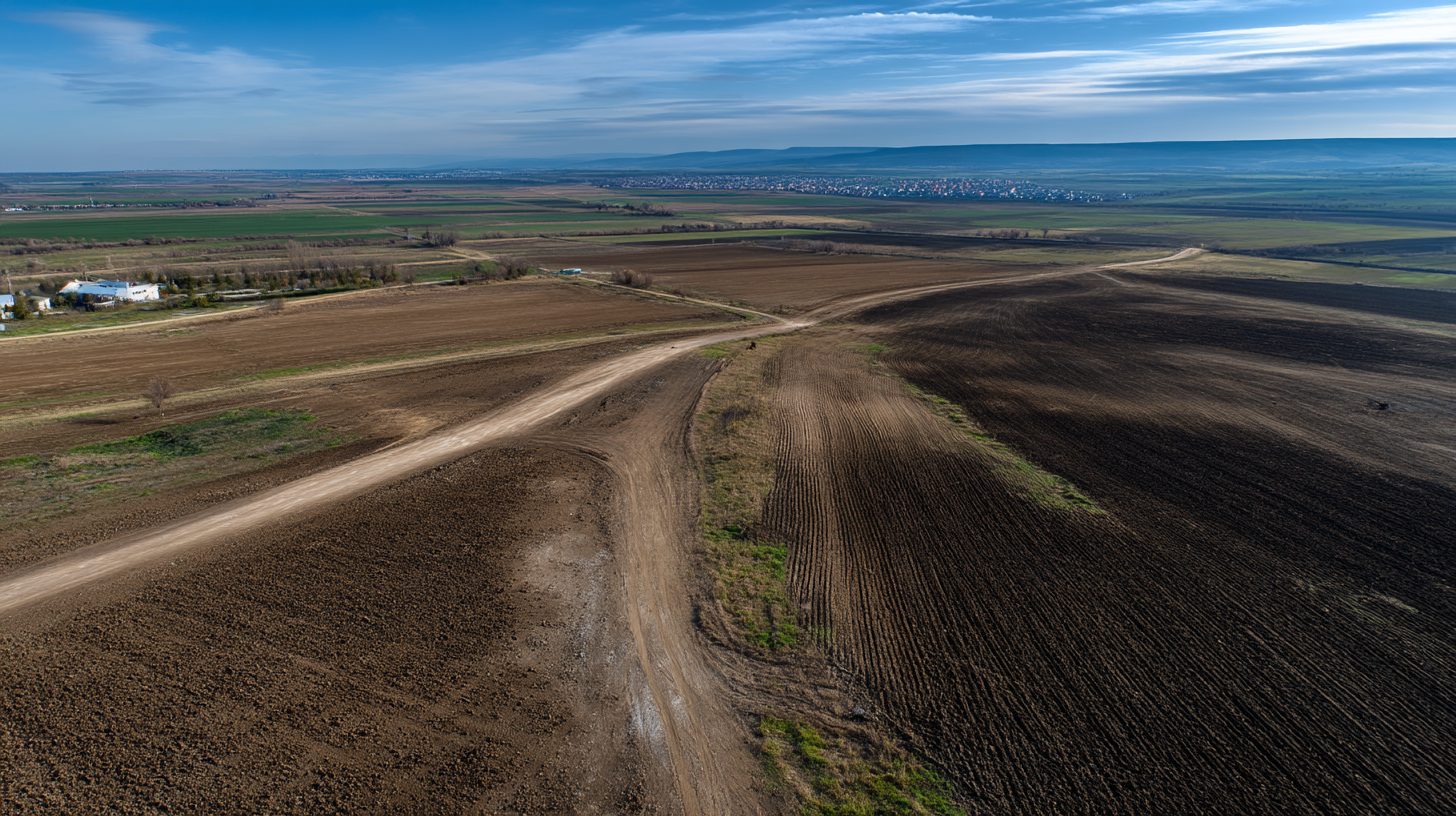
As the global shift toward renewable energy intensifies, investors are increasingly turning their attention to underutilized agricultural or industrial lands with high solar exposure. Romania’s Muntenia region has emerged as a promising destination for this trend, positioning itself as a key location for solar farm land investment in Muntenia. Foreign and English-speaking investors seeking a stable market with competitive land prices and strong upside potential are finding Muntenia particularly attractive. But is it the right investment at the right time? A closer look at regional dynamics, policy support, land costs, and potential returns can help provide a comprehensive market overview.
Why Muntenia Is Gaining Investor Attention
Muntenia, located in southern Romania, includes counties such as Giurgiu, Teleorman, Prahova, Dâmbovița, and Argeș. The region benefits from high solar irradiation levels, flat topography, and a well-developed electricity grid—key factors for developing utility-scale photovoltaic (PV) projects. According to Romania’s National Meteorological Administration, Muntenia receives over 1,300–1,500 kWh/m²/year of solar radiation, making it one of the most favorable areas in the country for solar energy harvest.
Another major driver is price. Compared to Western European agricultural markets or even lands in northern Romania, land in Muntenia is still relatively inexpensive. Depending on proximity to infrastructure and zoning status, prices can range between €3,000 and €10,000 per hectare, offering investors a cost-effective entry point for renewable energy development.
Government Incentives and Regulatory Climate
Romania has signaled strong support for renewable energy, aligning with EU directives that aim for a carbon-neutral economy by 2050. The Romanian Energy Regulatory Authority (ANRE) has simplified the approval process for small and large-scale renewable projects, including grid access facilitation and zoning adjustments. Notably, there are tax exemptions and financing support for green energy developments at both national and EU levels.
Muntenia counties are already seeing increased interest from both domestic and foreign developers. For example, recent large-scale solar projects in Giurgiu and Teleorman highlight investor confidence in the region’s viability. Romania’s Green Energy Law and alignment with the EU Recovery and Resilience Plan ensure that solar developers have access to both subsidies and grid improvement funding, directly benefiting landowners who lease or sell property for solar use.
Land Suitability – A Strategic Asset
What makes land in Muntenia particularly suitable for solar farms is a combination of physical and legal attributes. The prevalence of flat, unused agricultural terrain or former industrial land (commonly referred to as “brownfield sites”) minimizes pre-development costs. Environmental permits are easier to obtain on such lands and often come with pre-existing access to roads or transmission lines.
Moreover, certain counties like Ialomița and Călărași boast some of the least populated rural zones, reducing the conflict of interest with residential development. This facilitates administrative procedures and lowers the likelihood of public opposition, a factor often overlooked but crucial in long-term real estate planning.
Return on Investment and Revenue Stability
Solar farm investors in Muntenia can expect a return on investment (ROI) averaging 8–12% annually, depending on the project size, energy pricing mechanisms, and long-term power purchase agreements (PPAs). Romania’s integrated energy market within the EU enables cross-border electricity trading, thus increasing the competitiveness of energy produced locally.
Leasing land for solar development brings yields that exceed traditional agricultural use. Investors who purchase land and subsequently sign long-term lease agreements with developers can obtain stable revenue streams of €800–€1,200 per hectare annually, often indexed to inflation and exceeding agricultural lease returns by 2–3 times.
Additionally, with Romania expected to decommission several coal plants by 2030 under EU mandates, the structural shift to solar energy projects further solidifies long-term value appreciation for land designated for renewable development.
Legal and Zoning Considerations
While Romania offers strong potential, foreign investors must navigate certain zoning and ownership considerations specific to solar projects. The land typically needs to be reclassified from agricultural to industrial or mixed use for development. Fortunately, many local municipalities in Muntenia are welcoming solar investors, easing this process through favorable zoning plans.
Foreign ownership of Romanian agricultural land is permitted under EU membership, but investors should perform due diligence regarding land title clarity, zoning status, and environmental impact assessments. Partnering with local legal and real estate consultants familiar with renewable development can help streamline the acquisition and permitting timeline.
Risks and Market Volatility
As with any investment, buying or leasing land for solar energy comes with risks. Political changes, grid congestion, fluctuating electricity prices, and delays in permit issuance can affect project timelines and profitability. However, the mitigation of these risks is possible through careful land selection (ideally close to transformer stations or substations), securing fixed PPAs, and working with experienced developers.
Despite these challenges, the general trajectory of Romania’s energy market, along with strong EU integration and investor protections, continues to support a bullish long-term outlook for solar land investments—especially in regions like Muntenia that remain undervalued.
Long-Term Outlook and Opportunities
The solar market in Muntenia is not saturated, which gives early investors an opportunity to secure high-quality plots before larger institutional players dominate the landscape. As Romania continues to increase its renewable energy capacity target under the National Energy and Climate Plan (NECP), support for solar infrastructure and grid expansion will only increase.
With energy costs rising and EU emission targets accelerating, solar energy is no longer an alternative—it’s becoming the standard. Muntenia’s land market could experience substantial appreciation in the coming decade, driven by growing demand for renewable project sites and limited high-irradiation land availability in other EU countries.
Conclusion
Solar farm land investment in Muntenia offers a compelling proposition for foreign and English-speaking investors seeking exposure to a growth-oriented segment of the Romanian real estate market. The combination of low entry costs, strong solar performance, government-backed incentives, and increasing demand for green energy projects places this region at the forefront of renewable infrastructure development in Eastern Europe.
For investors willing to engage in thorough due diligence and navigate the local regulatory landscape, Muntenia offers not just lucrative returns but also long-term strategic advantages in a transforming energy economy.
Interested in Land Investment in Romania?
We specialize in high-yield land and property opportunities for serious investors.
VIEW OUR CURRENT PORTFOLIOSecure your investment with Land For Investors.

Published: January 20, 2026