

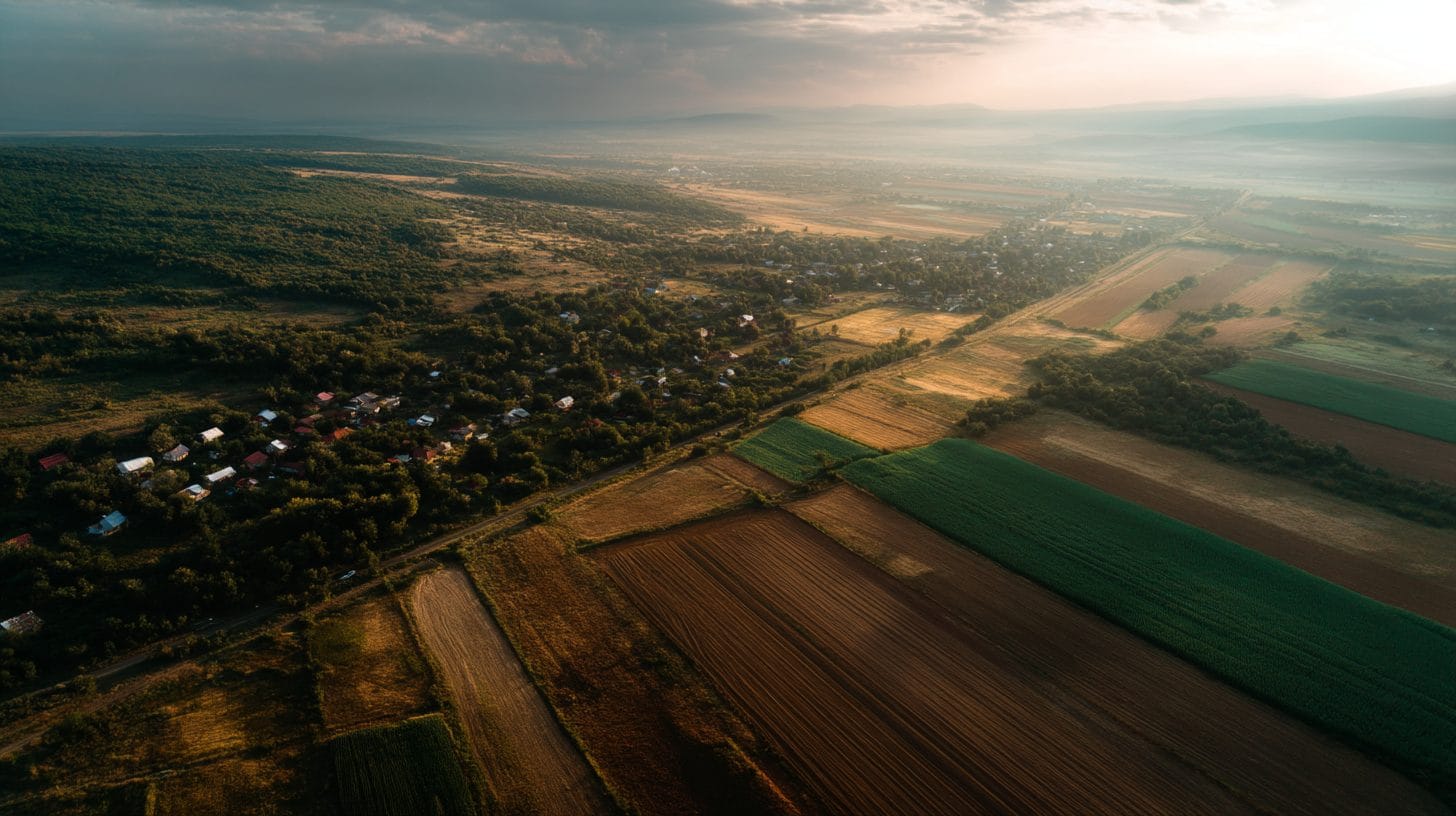
Romania’s economy has seen a structural shift in recent years, increasingly driven by domestic consumption and retail expansion. This change has brought a parallel growth in demand for commercial and retail-focused land across the country. As a result, investing in retail land around Romania is becoming more appealing to foreign and institutional investors targeting high-yield European markets. With a combination of rising consumer demand, infrastructure investments, and strategic geographic positioning, the Romanian retail land sector presents a compelling opportunity—but one that also requires careful market analysis.
Retail real estate demand in Romania
The upward trajectory of Romania’s retail sector is backed by strong fundamentals: a growing middle class, rising disposable income, and increasing urbanisation. Major cities like Bucharest, Cluj-Napoca, Timișoara, and Iași are reporting healthy retail foot traffic, while smaller secondary cities are benefiting from demographic resilience and underserved markets.
Developers and retailers are seeking locations for retail parks, standalone units, DIY stores, and logistics-linked commercial spaces. This demand is fueling interest in not just city centers, but the peripheries and suburban zones—making retail land around Romania, especially near expanding transportation corridors, an asset class to watch. Retail space vacancy rates remain low, while rents are holding steady or, in some prime retail areas, seeing upward pressure.
Key regions for retail land investments
Bucharest remains an obvious center of attention due to its size and economic significance. Yet, its high land prices are shifting interest to the surrounding Ilfov county, where commercial land near strategic highways (A1, A3) is attracting both retailers and developers.
Western Romania, notably around Timișoara and Arad, benefits from proximity to Western Europe and strong infrastructure connections, making it prime territory for retail park development. The same goes for Cluj-Napoca, which has become a magnet for foreign investors in multiple sectors, including real estate. Here, available plots near newly built residential neighborhoods and transit routes are providing retail land development prospects.
In southern Romania, cities such as Craiova and Pitești are seeing increased commercial activity. Proximity to the future A1 and A6 highway extensions is enhancing accessibility, which directly influences the potential of land designated for retail.
Retail trends shaping land value
Changing consumer behavior has a notable impact on retail land valuation. Retailers continue to seek visibility, accessibility, and parking availability—factors that favor plots along main access roads and close to residential pockets. The rise of big-box retail formats and convenience-driven shopping is helping push demand for shovel-ready land outside crowded urban cores.
There is also a shift in the tenant mix within retail projects, with discount brands and value-oriented chains steadily expanding. These operators often prefer retail strips and standalone sites rather than extensive malls, thus creating demand clusters in areas traditionally overlooked by developers. Retail land near population centers of 50,000 to 150,000 residents is now in higher demand than in previous decades.
Meanwhile, the growing role of e-commerce is paradoxically supporting some retail land investments. Logistics-retail hybrids and last-mile fulfillment centers are being positioned closer to final consumers, often on land with dual use potential: retail frontage with warehousing capacity. These hybrid demands are reshaping how investors value plots outside core city zones.
Legal and zoning considerations
As with any land-based investment, location is only part of the picture. Investors considering retail land around Romania must carefully assess zoning regulations, permit procedures, and infrastructure access.
Romania uses a General Urban Plan (PUG) that identifies permissible land uses, building indices, and development constraints. Retail-related uses typically fall under mixed or commercial zoning, but interpretations vary by locality. Local councils retain significant discretionary power, and engaging local legal advisors is critical to ensure clarity on what can be built and under what conditions.
Furthermore, infrastructure access—such as road entry points, utility networks, and parking allowances—is essential for retail developments. In cases where the land does not yet have proper access or utilities, the potential ROI might depend on additional investments or negotiations with municipalities.
ROI potential and risk factors
Returns on retail land vary based on location, permitting status, and end use. Land near operational retail parks or within fast-growing satellite towns can offer quicker development paths and secure tenants early in the process. In contrast, greenfield sites may offer lower entry costs but come with higher entitlement and timing risks.
Market data from leading real estate agencies indicates that land values for retail use in secondary cities range from €50/sqm to €150/sqm, while prime locations near Bucharest can exceed €300/sqm. The development yield potential—depending on lease agreements and construction costs—often falls within the 7% to 10% gross range, which remains attractive compared to Western European benchmarks.
However, investors should also weigh risks. Romanian bureaucracy, while improving, can still slow down projects. Political shifts at the municipal level can delay permitting or change regulatory priorities. Moreover, retail trends can shift rapidly, particularly if economic pressures dampen consumer sentiment.
Strategic considerations for international investors
For foreign investors eyeing retail land around Romania, several entry strategies exist. Direct acquisition of entitled land with immediate development potential is one route. Alternatively, partnering with local developers with regional expertise and pipeline projects may provide both risk mitigation and market access.
Investors should focus on land assets that align with evolving tenant demand—such as locations suited for convenience retail, drive-thru formats, or modular big-box spaces. Proximity to residential developments, new infrastructure, or upcoming transit lines can significantly enhance land appreciation over time.
Additionally, local commercial lending options are improving, with Romanian banks showing interest in well-structured real estate projects. This trend may allow investors to blend equity and debt strategies, thus optimizing capital deployment.
Conclusion
Retail land around Romania offers a strong investment proposition for those willing to navigate local regulatory frameworks and evolving retail formats. The country’s sustained economic growth, rising consumer demand, and expanding infrastructure are driving demand for retail sites beyond big-city downtowns. Key markets across the country—from Western logistic hubs to Eastern residential corridors—show potential for long-term capital appreciation and income generation.
With proper due diligence, strategic location selection, and strong local partnerships, investing in Romanian retail land can serve as a valuable addition to a diversified European real estate portfolio.
Interested in Land Investment in Romania?
We specialize in high-yield land and property opportunities for serious investors.
VIEW OUR CURRENT PORTFOLIOSecure your investment with Land For Investors.

Published: January 20, 2026