

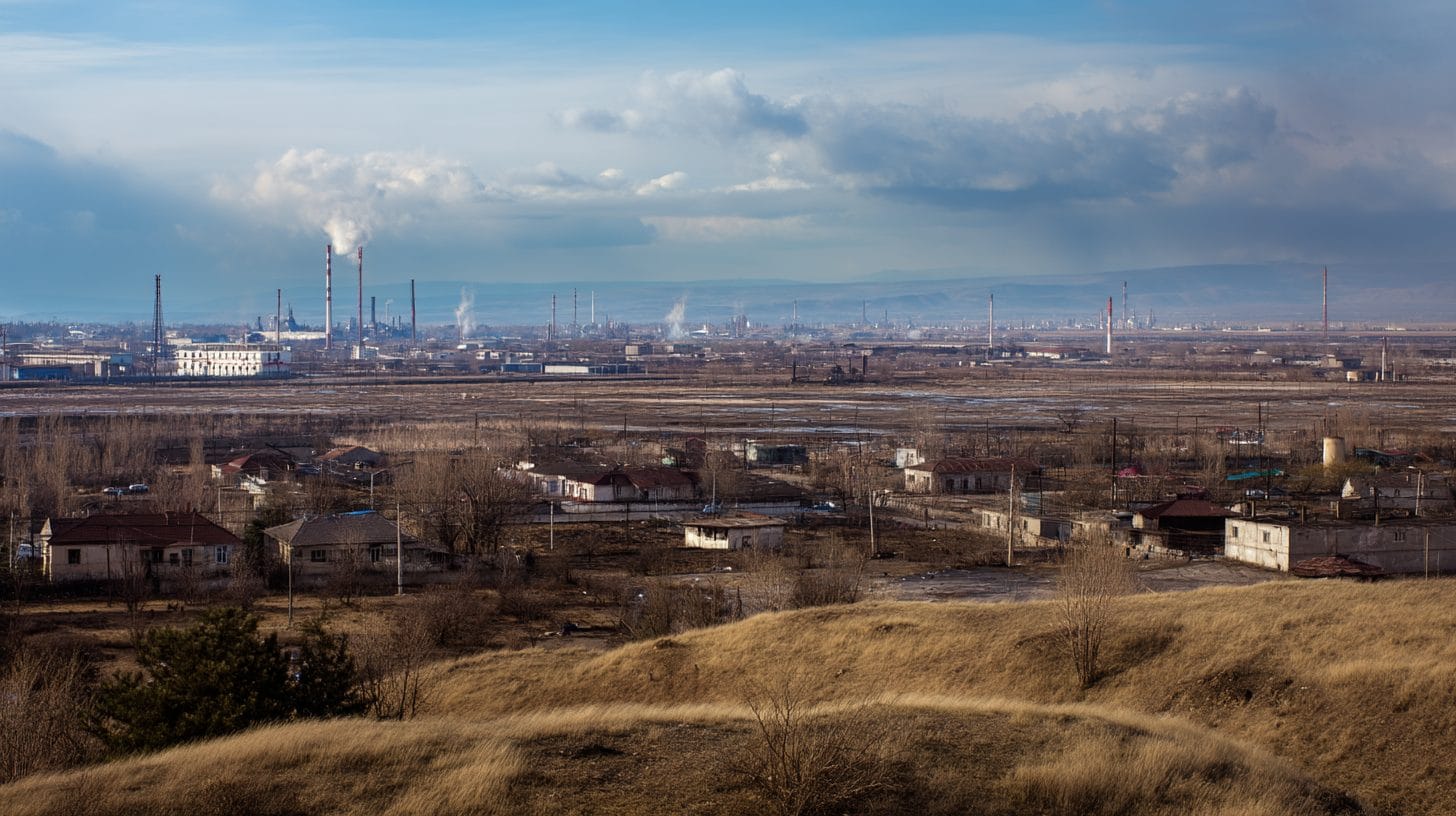
How to Use Satellite Imagery to Research Land Near Bucharest
In the contemporary landscape of urban planning, agriculture, and environmental monitoring, satellite imagery has become an indispensable tool for gathering comprehensive data about land use and geographical features. Satellite imagery of land in Bucharest offers critical insights for a variety of applications ranging from real estate development to environmental conservation. This article aims to provide a detailed guide on how to leverage satellite imagery effectively for research purposes concerning land near Bucharest.
Understanding Satellite Imagery
Satellite imagery refers to the photographs of Earth’s surface captured by satellites orbiting the planet. These images can provide valuable information on land cover, vegetation, hydrology, soil types, and human activities. The imagery is captured using different sensors that may be designed for optical, infrared, or microwave wavelengths, enabling varied analyses depending on the research focus.
Applications of Satellite Imagery in Bucharest
Land research utilizing satellite imagery in Bucharest serves multiple purposes. Urban planners employ it to analyze changes in land use over time, which helps in forecasting urban growth patterns. Environmentalists utilize these images to assess land degradation, deforestation, or the impact of urban sprawl on nearby ecosystems. Furthermore, the agricultural sector benefits from satellite imagery for crop monitoring and optimizing land use based on soil health and moisture levels.
Where to Obtain Satellite Imagery of Bucharest
Numerous platforms provide access to satellite imagery, both free and paid. Here are some reliable sources where one can obtain satellite imagery related to land in Bucharest:
1. Google Earth: One of the most user-friendly platforms, offering both historical and current satellite imagery. Users can navigate through various layers, allowing for comparisons over time.
2. Sentinel Hub: This service uses imagery from the European Space Agency’s Sentinel satellites, providing high-resolution data for land investigations. Researchers can utilize its tools for visualizing and analyzing spectral data.
3. NASA’s EarthData: A platform that houses several datasets, including MODIS and Landsat imagery. Researchers can filter for specific time ranges, ensuring comprehensive studies over years.
4. Planet Labs: A commercial satellite imagery provider that captures daily images of Earth at a higher resolution. This service can be particularly valuable for projects necessitating frequent updates.
5. ISRO’s Bhuvan: An Indian satellite service that also offers data pertaining to various parts of the world, including Europe. It focuses on environmental monitoring and could be advantageous for ecological studies.
Processing and Analyzing Satellite Imagery
Once you have acquired the imagery, the next step is to process and analyze the data to extract meaningful information:
1. Image Processing: Software tools like QGIS, ArcGIS, or ENVI can be employed to manipulate satellite images. Common techniques include atmospheric correction, image enhancement, and geometric correction to align the images accurately with geographical coordinates.
2. Change Detection Analysis: This technique involves comparing images from different times to identify changes in land use or land cover. Different algorithms, such as Normalized Difference Vegetation Index (NDVI), can help assess vegetation health, while classification techniques can categorize land use.
3. 3D Visualization: Advanced software like Google Earth Pro allows researchers to visualize land in three dimensions. This aids in the understanding of topographical features and aids in practical applications such as site selection for construction.
4. GIS Integration: Incorporating Geographic Information Systems (GIS) with satellite imagery enables layered analyses, where additional data such as demographics, infrastructure, or environmental regulations can be overlaid to provide contextual insights for research.
Evaluating Land Use Near Bucharest
Researching land use near Bucharest with satellite imagery facilitates a detailed examination of urbanization patterns. By analyzing the imagery, one can observe residential expansions, industrial developments, and commercial zones. This analysis informs decision-makers about zones that may require infrastructure enhancement or regulatory measures.
Determining Environmental Impact
The proximity of Bucharest to natural reserves, rivers, and agricultural lands makes it vital to consider ecological implications. Researchers can employ satellite imagery to monitor land cover changes due to urban expansion or agricultural practices. Assessing parameters such as vegetation cover, soil erosion, and water quality becomes crucial for sustainable land management.
Case Studies Utilizing Satellite Imagery
Research projects in Bucharest have utilized satellite imagery for a range of applications. Urban studies have documented sprawl patterns, revealing how residential zones have encroached upon green spaces. Environmental assessments have monitored the integrity of aquatic ecosystems in the vicinity of the Dâmbovița River. These case studies highlight the versatility of satellite imagery, contributing to sound decision-making and policy formulation.
Integrating Community Input
Although satellite imagery provides comprehensive data, incorporating local knowledge is essential for robust land research. Collaborating with local stakeholders, including municipalities, NGOs, and residents, can yield insights that the imagery alone cannot provide. Crowdsourcing community inputs can enhance the quality and relevance of research findings.
Challenges and Limitations
Despite its numerous advantages, researchers must be aware of the limitations of satellite imagery. Resolution, cloud cover, and atmospheric conditions can sometimes impair the quality of images. It is crucial to account for these factors when conducting analyses. Additionally, while satellite imagery can suggest changes, ground verification is often necessary to confirm findings.
Future Trends in Satellite Imagery Research
As technology advances, the field of satellite imagery research will continue to evolve. The development of hyperspectral imaging and drones equipped with high-resolution cameras promises to enhance the precision of land studies near Bucharest. Furthermore, initiatives to increase access to real-time data will empower researchers and planners, ensuring that decisions are informed by the most current information available.
Conclusion
In summary, satellite imagery serves as a vital resource for researching land near Bucharest. Utilizing various platforms to acquire imagery, employing analytical tools for processing and interpreting data, and integrating ground-level insights will enhance the quality of research outcomes. As urban planners, environmentalists, and researchers increasingly rely on satellite technology, Bucharest stands to benefit significantly from enhanced understanding and management of its land resources. Embracing this technology not only enables informed decision-making but also fosters sustainable practices that can shape the city’s future for the better.
Interested in Land Investment in Romania?
We specialize in high-yield land and property opportunities for serious investors.
VIEW OUR CURRENT PORTFOLIOSecure your investment with Land For Investors.

Published: March 14, 2025