

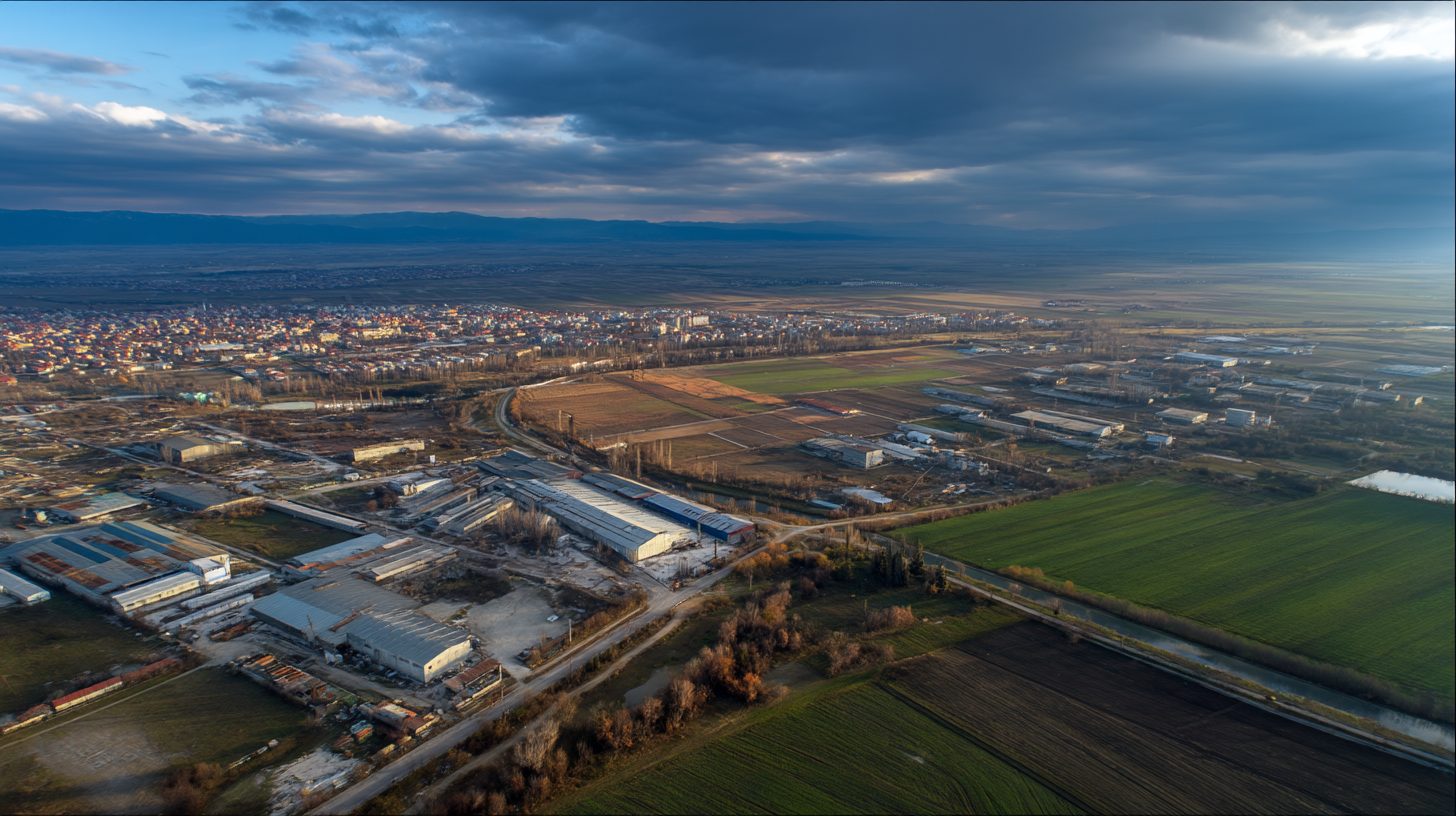
Assessing Land Accessibility to Public Transportation on Bucharest’s Ring Road
In recent years, the issue of land accessibility to transportation systems has gained paramount importance in urban planning, particularly in rapidly growing cities like Bucharest, Romania. As the capital and largest city in the country, Bucharest serves as a central hub for commerce, culture, and education. However, the increasing population density and urban sprawl have raised concerns regarding efficient land utilization and public transportation accessibility, particularly around the Bucharest Ring Road. This article aims to dissect the levels of land accessibility to public transportation along Bucharest’s Ring Road, focusing on the implications for urban development and sustainability.
Bucharest’s Ring Road, or “Centura București,” forms a critical circular artery surrounding the city. Spanning approximately 70 kilometers, the Ring Road facilitates traffic flow while connecting major suburban areas to the city center. Nonetheless, its role goes beyond merely managing vehicle transit; it’s crucial in determining land accessibility to public transportation services. Understanding how effectively the Ring Road provides access to public transport can significantly influence economic development and quality of life for residents.
One of the primary challenges in assessing land accessibility to transportation on the Bucharest Ring Road is the dichotomy between urban and suburban areas. While the urban core boasts a well-established public transportation system, including a metro network, buses, and trams, many peripheral regions remain under-served by public transit options. The Ring Road thus highlights the disparities in access to public transportation that can hinder mobility and social equity.
In evaluating the land accessibility transportation Bucharest ring road, it is essential to analyze existing infrastructure and service patterns surrounding this vital road. Currently, several public transportation options serve key nodes along the Ring Road, yet they are not uniformly distributed. For example, areas in the northwest of Bucharest enjoy adequate metro service, while other segments, particularly in the southern regions, are largely reliant on buses with less frequent service.
To quantify accessibility, various metrics can be employed, such as distance to the nearest public transport stop, service frequency, and the time it takes for residents to reach major transit hubs. Research consistently indicates that areas with high-density housing near public transport nodes tend to exhibit improved accessibility and provide residents with better chances for employment, healthcare, and education. Therefore, effective urban planning around the Ring Road must prioritize connectivity by enhancing existing public transit options and exploring multimodal transportation solutions.
Sustainable development is increasingly becoming a focal point for urban agendas worldwide, including Bucharest. An efficient public transportation system along the Ring Road can significantly reduce the dependence on personal vehicles, thereby mitigating congestion and lowering carbon emissions. This perspective urges stakeholders to consider integrating less conventional transit services, such as bicycles or shared mobility solutions, alongside traditional public transport.
Moreover, Bucharest’s Ring Road presents a unique opportunity to integrate land use planning with transportation systems. The principle of Transit-Oriented Development (TOD) can be instrumental in creating mixed-use developments that encourage higher-density residential and commercial spaces around transit nodes, thus enhancing the overall accessibility of land along the Ring Road. Implementing such a strategy will not only promote efficient land use but also stimulate local economies and foster community engagement.
Another factor to consider in assessing land accessibility transportation Bucharest ring road is the role of government policies and investment in transportation infrastructure. Over the years, various initiatives have been proposed, some resulting in the construction of new transport links, while others have focused on upgrading existing facilities. However, insufficient funding and bureaucratic obstacles have often stalled progress. To achieve optimal land accessibility to public transport, it is crucial for local authorities to prioritize infrastructure investments, apply for EU funding, and foster public-private partnerships that could lead to innovative transportation solutions.
Public engagement is a vital component of understanding community needs and requirements in terms of transportation. Surveys, public forums, and stakeholder meetings can gather insights on public perception regarding current transit services alongside expectations for future improvements. These community-driven efforts can create a feedback loop that enhances public trust and leads to more effective urban planning initiatives in line with residents’ needs.
Additionally, studying best practices from other major cities can provide critical insights into enhancing land accessibility to transportation. Cities like Amsterdam, Portland, and Vienna use comprehensive transportation models that prioritize public transit accessibility, offering valuable lessons for Bucharest. Adopting elements of these models, tailored to local conditions, could vastly improve land accessibility to public transportation along the Ring Road.
In conclusion, assessing land accessibility to public transportation on Bucharest’s Ring Road demands a multidisciplinary approach that takes into account urban planning, sustainability, social equity, and community engagement. As the capital urbanizes and the demand for effective transit solutions increases, it is imperative for policymakers and stakeholders to prioritize the enhancement of public transportation systems, ensuring they cater to both current and future needs. A well-connected Ring Road can serve as a cornerstone for sustainable urban development, reinforcing Bucharest’s role as a dynamic and accessible city for all residents. It is only through this holistic perspective that Bucharest can leverage its transportation infrastructure to transform the Ring Road into a gateway for economic and social progress.
Interested in Land Investment in Romania?
We specialize in high-yield land and property opportunities for serious investors.
VIEW OUR CURRENT PORTFOLIOSecure your investment with Land For Investors.

Published: March 23, 2025