

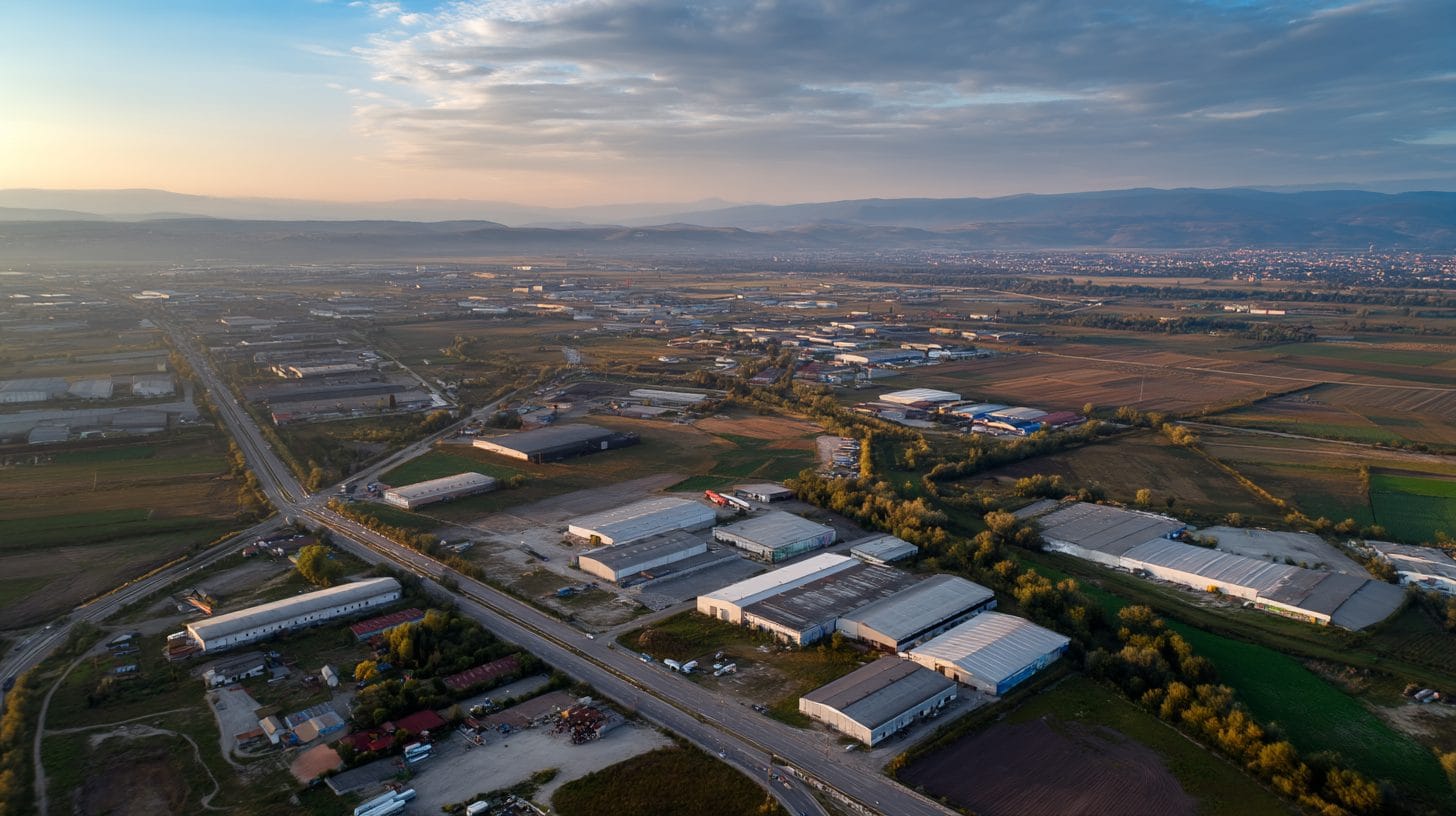
As Romania continues to experience rising interest from foreign investors, the country’s logistics and industrial sectors are becoming increasingly attractive. For those eyeing opportunities in the development of storage and distribution facilities, warehouse land outside Ilfov County presents a unique investment proposition. Being just outside the metropolitan influence of Bucharest, such land offers both cost advantages and logistical benefits. Making the right decision, however, requires a clear understanding of the legal, logistical, and infrastructural context surrounding this niche segment of Romanian real estate.
Strategic location advantages
One of the primary draws of warehouse land outside Ilfov is its strategic geographical positioning. Ilfov surrounds Bucharest, Romania’s capital and largest urban center, and its proximity naturally elevates the value of surrounding counties such as Giurgiu, Dâmbovița, and Călărași. These areas often benefit from existing infrastructure meant to support the wider Bucharest region, including access to major transport corridors like the A1 and A2 motorways, as well as the planned Bucharest Ring Motorway (A0).
Investors choosing to position their warehouses just beyond Ilfov’s borders can benefit from the reduced land costs and lower local taxes, while still maintaining efficient access to the capital and to national and international distribution routes. With the rising costs of logistics land within Ilfov proper, this suburban fringe represents an appealing cost-to-benefit alternative.
Zoning and legal considerations
Before purchasing warehouse land outside Ilfov, investors must navigate Romania’s zoning regulations and land-use designations. Not all parcels are immediately ready for industrial development. It’s essential to verify that the targeted land is classified for industrial or logistics use through the local urban plan (PUZ – Plan Urbanistic Zonal). If the land is designated for agriculture or residential purposes, rezoning may be required—a process that can be lengthy and requires approval from both local councils and urban planning authorities.
Foreign investors should also be aware of Romania’s laws regarding non-EU citizens acquiring land. While citizens from EU and EEA countries can purchase land under similar conditions as Romanian nationals, non-EU investors may face restrictions unless the acquisition is structured through a Romanian-based legal entity. Due diligence with legal counsel is critical to ensure compliance and reduce risk.
Access to labor and infrastructure
Choosing warehouse land outside Ilfov also brings into consideration the availability of workforce and supporting infrastructure. Though these areas may offer lower labor costs compared to urban centers, availability can vary significantly depending on the specific locality. Towns with higher unemployment rates or vocational training schools for logistics and mechanics can be advantageous for staffing a new warehouse operation.
Additionally, infrastructure cannot be overlooked. Investors should assess road connections, utilities (electricity, water, sewage), and telecommunication availability on the selected land parcel. While proximity to a highway or rail terminal is ideal, it is also important to understand whether last-mile infrastructure improvements will be required and who bears those costs—the investor or the local municipality.
Comparing prices and ROI potential
Land prices just outside Ilfov are significantly lower than those found within its borders, often by as much as 30% to 50%, depending on proximity to Bucharest and access to transport routes. While locations such as Măgurele or Chitila are becoming saturated and pricier due to their proximity to the city, areas slightly further—such as Bolintin-Deal in Giurgiu County or Fundulea in Călărași—still offer attractive pricing with reasonable connectivity.
For investors evaluating return on investment, this price differential can be decisive. Beyond the initial savings in land acquisition, construction and operation costs may also be lower due to less stringent environmental and architectural constraints compared to areas closer to Bucharest’s urban center. However, ROI must also account for potential delays due to permitting or infrastructure limitations, so comprehensive feasibility studies remain a fundamental step.
Development trends and future outlook
Romania has seen a steady expansion of its logistics and industrial real estate sector, driven by both domestic economic growth and its role as a gateway into the EU market. With e-commerce, manufacturing, and freight activity on the rise, demand for regional warehouses and distribution centers is set to increase steadily.
Locations outside Ilfov are particularly well positioned to benefit from this trend as investors grow wary of inflated costs and limited space within the county. The Romanian government’s continued investment in road infrastructure, including the completion of major transport projects like the A0 ring highway and the modernization of the railway network, adds further appeal to nearby counties.
Co-operation with local authorities plays a critical role here. Proactive municipalities offering streamlined permitting processes and incentives such as tax breaks or access to industrial parks can significantly enhance the appeal of a given location. Several counties surrounding Ilfov have already begun to compete in this space, establishing dedicated industrial zones aimed at attracting foreign direct investment.
Key risks to consider
While investment in warehouse land outside Ilfov carries numerous advantages, it is not without risk. Investors must be cautious of speculative offerings without proper zoning, hidden infrastructure costs, or parcels affected by outdated cadastre records. Romania’s real estate sector has made progress in increasing transparency and regulatory efficiency, but localized issues can still pose challenges.
Fluctuations in political or fiscal policy, such as changes in property taxation or zoning regulations, may impact the profitability of a long-term logistics facility. Currency fluctuation between the Romanian leu (RON) and major investor currencies like the euro or US dollar is another factor to consider when projecting long-term financial performance.
Final thoughts for investors
Acquiring warehouse land outside Ilfov can be a strategic move for investors looking to develop logistics infrastructure in Romania while optimizing costs. The land value proposition in counties adjacent to Ilfov is supported by solid infrastructure, improving connectivity, and a more favorable price environment. However, success in this segment depends on conducting stringent due diligence, understanding local regulations, and aligning development goals with the logistical and economic profile of the selected area.
With Romania continuing to integrate more deeply into European supply chains, the importance of warehouse and distribution hubs will only grow. Savvy investors who act now may find themselves well positioned in a market segment poised for sustained expansion.
Interested in Land Investment in Romania?
We specialize in high-yield land and property opportunities for serious investors.
VIEW OUR CURRENT PORTFOLIOSecure your investment with Land For Investors.

Published: January 20, 2026