

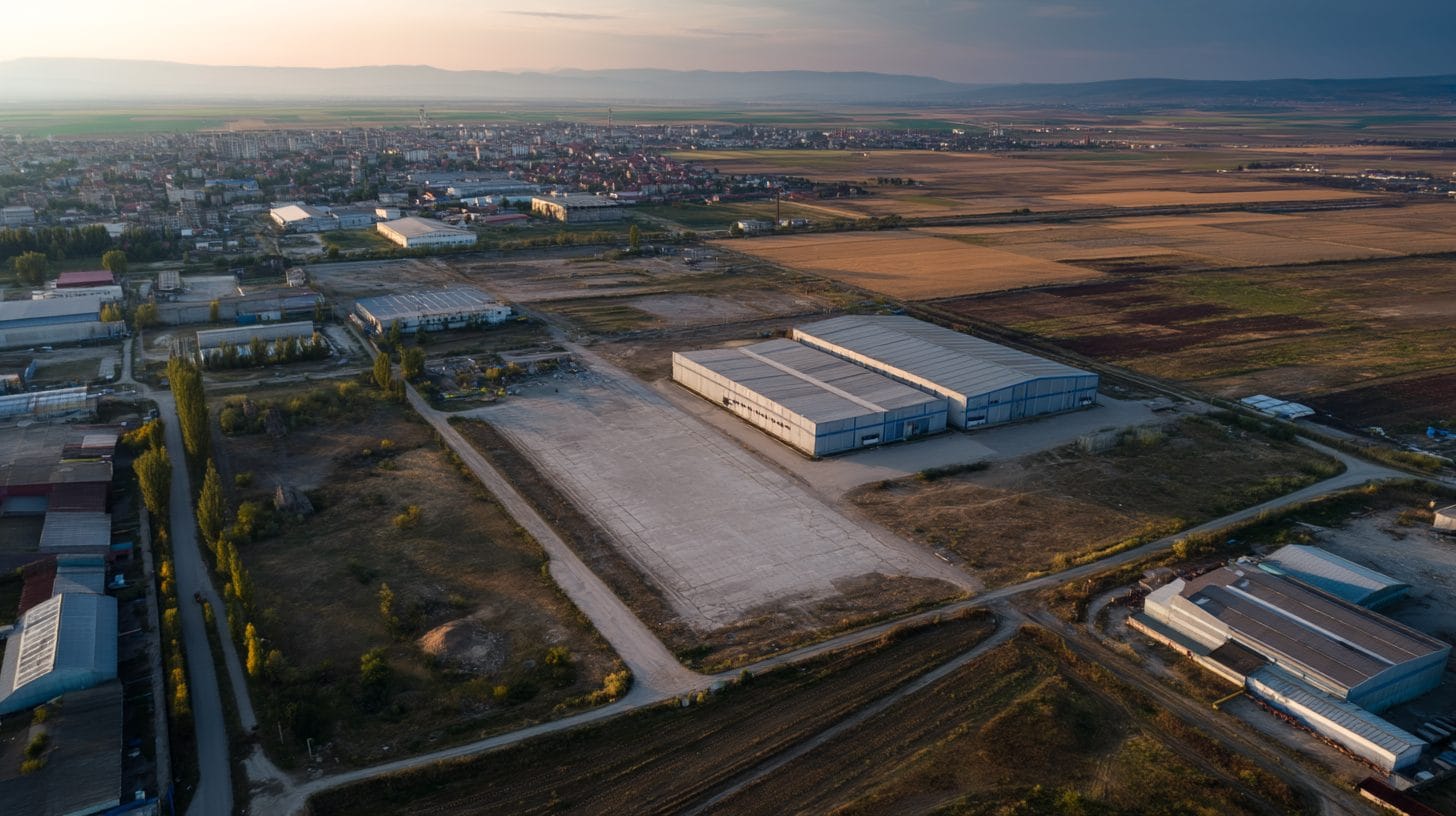
Romania’s growing economy and ascending real estate market have turned international eyes toward Transylvania — particularly the areas in and around major cities like Cluj-Napoca. While Cluj itself commands high property prices due to tech sector expansion and a burgeoning student population, the surrounding towns and rural areas present a compelling case for property investments. For those exploring property outside Cluj, now may be the ideal moment to assess location value, affordability, and the balance of long-term return.
The Cluj-Napoca ripple effect
Cluj-Napoca, known as the unofficial capital of Transylvania, has experienced a surge in real estate demand over the past decade. This demand, driven by a vibrant IT sector, major universities, and multinational business presence, is pushing prices within city limits well above the regional average. However, this trend has resulted in a spillover effect, with investors and homeowners alike turning to the outer ring and satellite communities within 20 to 40 kilometers of the urban core.
Localities such as Florești, Apahida, Baciu, Gilău, and Turda are gaining traction. These areas offer significantly lower land and property prices than Cluj-Napoca, yet benefit from strong infrastructure connections and services due to their proximity to the city.
Investment dynamics in villages and small urban centers
One of the most attractive aspects of buying property outside Cluj is the diversity of available land. From agricultural plots to development land already zoned for residential or mixed-use construction, investors have access to flexible purchase options. The average price per square meter in Florești or Baciu, for instance, is more attainable for medium-budget investors, while areas slightly further out — such as Câmpia Turzii or Huedin — offer even more competitive pricing with potential for future appreciation.
Small towns and rural municipalities have become particularly appealing for residential developers targeting the upper middle class or expatriate Romanians returning from Western Europe. The trend toward remote work has further accelerated interest in countryside or peri-urban areas where buyers can obtain larger plots, garden space, and a quieter lifestyle — all without completely disconnecting from the urban economy of Cluj.
Infrastructure and accessibility as key decision factors
One of the critical elements influencing property value in regions surrounding Cluj is transport and connectivity. The expansion of the A3 motorway (Transylvania Highway) and ongoing upgrades to national roads have dramatically shortened travel times between Cluj-Napoca and its neighboring towns. For example, Turda now serves as an important junction on the highway and is positioned to benefit from improved logistics, industrial development, and housing demand.
Additionally, the Cluj International Airport continues to extend foreign connectivity, positioning the whole metropolitan and peri-metropolitan area as an accessible base for foreign investors, professionals, and retirees. Access to reliable utilities, transport nodes, and proximity to logistics parks add a significant layer of investment feasibility throughout the region.
Development trends and zoning opportunities
Any investor considering property outside Cluj should conduct careful due diligence regarding zoning and land designation. Local development plans (PUG – Plan Urbanistic General) of each commune and town influence whether a plot of land may be legally developed. Several communes around Cluj-Napoca, such as Feleacu and Ciurila, are experiencing increased interest for luxury villas and weekend retreats, taking advantage of panoramic hilltop locations and natural surroundings.
Moreover, local authorities have shown openness in recent years to updating urban integration strategies to incorporate population growth and urban spread, creating room for investor proposals in mixed-use, residential, and eco-tourism concepts.
Florești: the suburban expansion model
Florești, now considered one of Romania’s fastest-growing communes, is a prime example of how settlements adjacent to Cluj-Napoca evolve with investor support. With tens of new apartment buildings, retail expansion, and plans for educational and medical facilities, Florești mirrors a suburban model familiar to Western investors. Though private infrastructure has often outpaced public investment, the high tenant demand and sharp valuation increase in the last five years make Florești a reference point for investing in property directly outside Cluj.
However, the very success of Florești has also underscored risks: congestion, underdeveloped sewage and traffic systems, and a lack of coordinated urban planning in early development stages. These serve as vital lessons for those eyeing other emergent areas to monitor municipal planning trends and upcoming investment in services.
Rural opportunities with ecological value
For investors aiming at tourism, wellness, or niche agriculture, the Romanian countryside near Cluj offers remarkable potential. Areas like Băișoara, Mărișel, and Săvădisla blend natural beauty with attractive pricing. Mountain and forest proximity yields opportunities in eco-resorts, guesthouses, and small-scale organic farming ventures — segments that align with national and EU-backed rural development financing programs.
Because these kinds of properties may have historical or environmental designations, investors need to account for restrictions. However, for long-term strategic investors with vision, the acquisition of undervalued rural land within commuting distance to Cluj-Napoca could produce both financial and lifestyle returns as Romania continues integrating further into the European economic sphere.
Short-term vs. long-term investment strategies
In terms of exit strategy, property outside Cluj offers flexibility. Buy-to-let opportunities exist near educational or industrial hubs like Turda and Apahida, while land banking — acquiring plots for future value accumulation — remains viable in expanding areas under speculative growth.
Foreign investors should also consider Romania’s relatively low property taxation and favorable ownership laws compared to other EU members. With Cluj acting as a real estate engine for neighboring settlements, both short-term flips and long-term holding strategies become attractive, provided one accounts for planning permissions and demand cycles.
Strategically acquiring property outside Cluj-Napoca allows investors to tap into one of Romania’s most dynamic real estate regions without absorbing the full capital expenditure required in the city center. Timing, research, and alignment with local development plans are essential to success, but the region’s combination of strong infrastructure, economic vitality, and semi-rural charm makes it a compelling choice for foreign investors seeking both value and growth.
Interested in Land Investment in Romania?
We specialize in high-yield land and property opportunities for serious investors.
VIEW OUR CURRENT PORTFOLIOSecure your investment with Land For Investors.

Published: January 20, 2026