

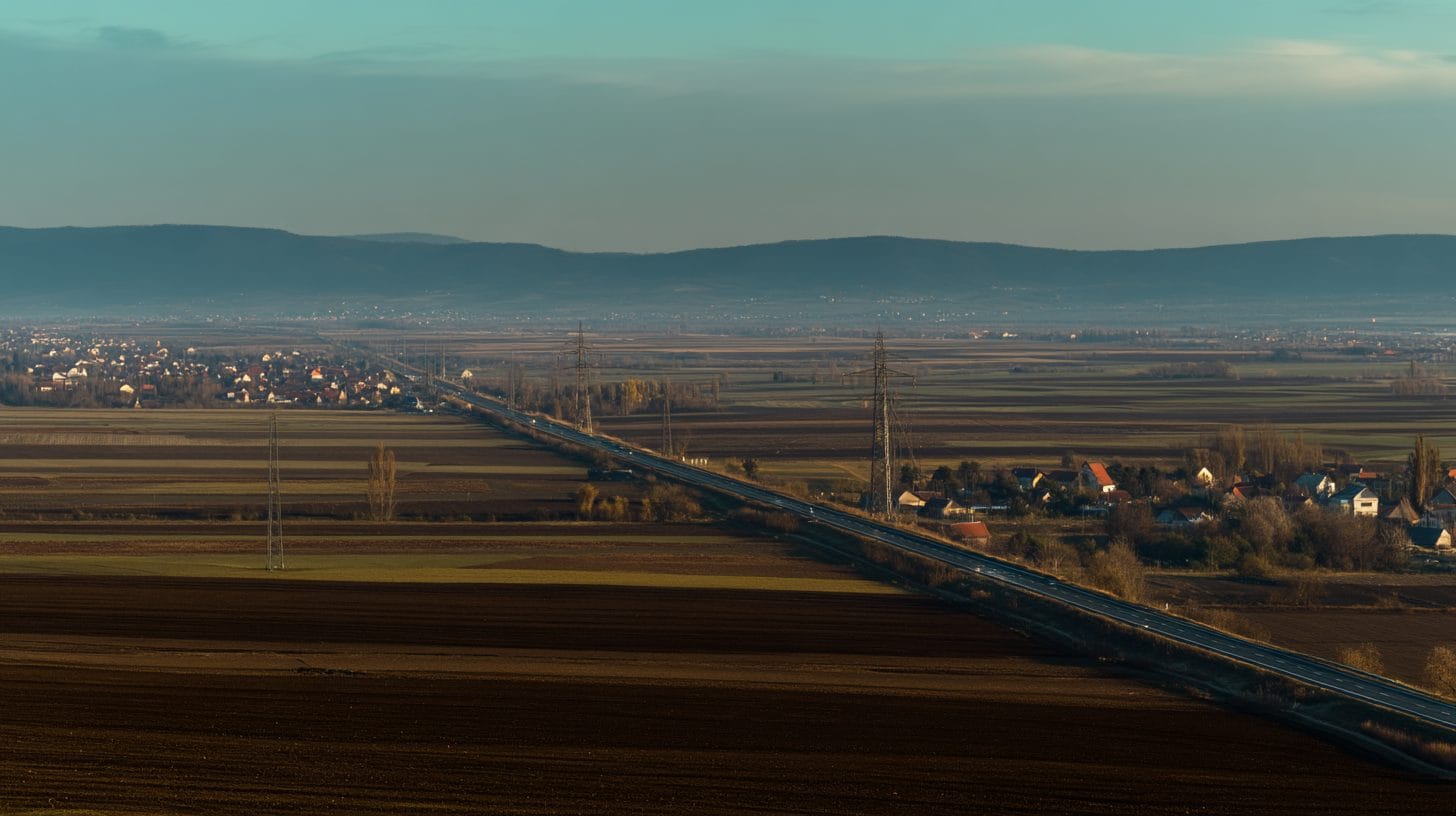
Romania’s strategic position at the crossroads of Central and Southeast Europe is drawing increasing interest from global investors, particularly in the eastern Dobrogea region. Foreign and local developers are taking notice of the growing opportunities surrounding the office land logistics hub Dobrogea has the potential to become. This convergence of logistics, office space development, and geographic advantage is turning this once-overlooked region into a serious contender for long-term investment in industrial and commercial property.
Understanding Dobrogea’s Strategic Value
Dobrogea, bordered by the Danube River to the west and the Black Sea to the east, offers exceptional access to both land and maritime trade corridors. It serves as a gateway between the European Union and the Caucasus, Balkans, Central Asia, and the Middle East. Constanța, the principal port city in the area, houses the largest seaport on the Black Sea—Port of Constanța—which handles massive freight flows and offers multimodal transport connections via railways, roads, and waterways.
From an investor’s perspective, Dobrogea delivers the geographical fundamentals necessary for sustainable growth in logistics and office real estate. Over recent years, infrastructure investments have enhanced its appeal—most notably, upgrades to the Port of Constanța, expansion of the A2 and A4 motorways, and EU-funded railway modernizations linking the area more efficiently with Bucharest and other parts of Romania.
The Potential of a Logistics and Office Land Hub
As global supply chains recalibrate and companies seek alternative routes into the EU market, interest in land for logistics centers and office development is increasing. Large-scale distribution projects now require proximity to both transport nodes and administrative service hubs—traits that office land logistics hub Dobrogea propositions uniquely satisfy.
Investors looking into land acquisition opportunities in this region will find cost advantages over Western European markets, a trained labor pool stemming from academic institutions in Constanța, and supportive policies aligned with EU cohesion funding. Romania’s fiscal regime, offering one of the lowest corporate tax rates in the EU at 16%, further strengthens the financial case.
Moreover, Romania’s inclusion in the EU and recent Schengen area expansion to include air and sea border crossings as of March 2024 create more seamless logistics conditions for international operators.
Key Considerations When Purchasing Development Land in Dobrogea
Before committing capital to a project in Dobrogea, investors must understand several critical dimensions that affect ROI and operational success:
Zoning and Permits
Land designated for office or logistics use must conform to local urban planning regulations. In Romania, each commune or municipality has a General Urban Plan (PUG) and Zonal Urban Plan (PUZ) that regulate allowable land use, building density, and infrastructure obligations. Investors should conduct due diligence to verify zoning classification and potential for rezoning, should it be required.
Connectivity and Utilities
Available logistics land in Dobrogea may vary in connectivity level. Parcels near Constanța or along major corridors like the A2 motorway generally offer better infrastructure provision, including access to electricity, water, sewage, and fiber-optic internet. In more rural settings, investors may face higher upfront capital expenditures to make land development-ready.
Land Ownership and Legal Title
Foreign investors must ensure that the land title is clear, uncontested, and registered with the Romanian Land Register. Due diligence should involve checking for liens, mortgages, or pending litigation that could affect transferability or future development. It is advised to work with local legal experts familiar with real estate transactions in the region to navigate complexities specific to Romanian property law.
Environmental and Archaeological Assessment
Certain areas in Dobrogea fall under environmental or archaeological protection, particularly close to the Danube Delta or historical sites near coastal towns. Environmental assessment reports (EIA) and clearance from heritage authorities may be necessary before construction can proceed. Failing to secure these can greatly delay or derail projects.
Labor Market and Workforce Trends
The Dobrogea region, particularly around Constanța, benefits from a steady pool of semi-skilled and skilled labor due to local universities, maritime academies, and vocational schools. For logistics and back-office operations, availability of young professionals with language proficiency and technical skills strengthens the region’s comparative advantage.
Emerging Submarkets to Watch
While Constanța remains the focal point for larger logistics investments, emerging locales such as Medgidia, Cernavodă, and Tulcea are attracting attention due to increasing land availability and lower acquisition costs. These secondary markets lie within a 50- to 100-kilometer radius of Constanța and provide strategic positions along inland waterways or near future highway extensions such as the A5 project.
Smaller towns like Năvodari are also experiencing growth as industrial clusters tighten around the port and tourism sectors blend with warehouse conversions. As global shipping patterns evolve post-pandemic, proximity to secondary ports or inland terminals could make these areas lucrative for early movers.
Government Incentives and EU Funding Schemes
Investors interested in developing office and logistic facilities in Dobrogea may benefit from both national and European incentives. Romania’s state aid schemes can cover up to 50% of qualified CapEx for strategic investments exceeding €1 million in underdeveloped regions. Meanwhile, funding from the EU’s Cohesion Policy and Connecting Europe Facility (CEF) continues to co-finance infrastructure developments that unlock economic potential in regions like Dobrogea.
Additionally, Romania’s Recovery and Resilience Plan, financed through the EU post-COVID scheme, includes allocations aimed at digitizing logistics and improving green infrastructure such as electric logistics fleets and solar-powered industrial parks. Investors should monitor local implementation of such programs, as aligning with these green objectives can provide both financial and reputational benefits.
Conclusion
For forward-looking investors prioritizing geostrategic value, infrastructure access, and a favorable cost environment, the office land logistics hub Dobrogea is a sound bet. Whether considering a last-mile logistics facility near Constanța, an administrative back-office complex in Tulcea, or a hybrid industrial park in Medgidia, this Romanian region holds promise for scalable and resilient property investments.
As always, entering the market with thorough due diligence and on-the-ground expertise will be crucial in converting Dobrogea’s potential into long-term, sustainable returns. Investors willing to act early will likely enjoy first-mover advantages in what is fast becoming an indispensable logistics and business corridor in Eastern Europe.
Interested in Land Investment in Romania?
We specialize in high-yield land and property opportunities for serious investors.
VIEW OUR CURRENT PORTFOLIOSecure your investment with Land For Investors.

Published: January 20, 2026